Skip to content
 When a lorry breaks down on the autobahn, the priority is usually the vehicle, the cargo and the driver’s schedule. When that lorry is a horse transporter carrying live animals, the priorities change completely. Every minute on the hard shoulder is a minute of stress for creatures that did not choose to be there, sitting in a metal box next to fast-moving traffic, unable to understand why the journey has stopped.
n
This is exactly the situation LKWHelp24 was called to handle on the A8 near Munich, heading towards Salzburg. A Belgian breeding operation was transporting horses through Germany when their articulated horsebox lost coolant or oil from the tractor unit and could go no further. What followed was not a standard roadside repair. It was a coordinated recovery built around animal welfare first, with the mechanical problem treated as the secondary issue it actually was.
n
We are sharing the details here because this case illustrates something that does not come up often enough in breakdown assistance: sometimes the fastest fix is not the right one, and sometimes the right call is to stop trying to repair the vehicle at all and instead get the cargo moving again by other means. For a lorry full of pallets, that decision is a business one. For a lorry full of horses, it is a welfare one, and it changes how the whole job has to be run.
n
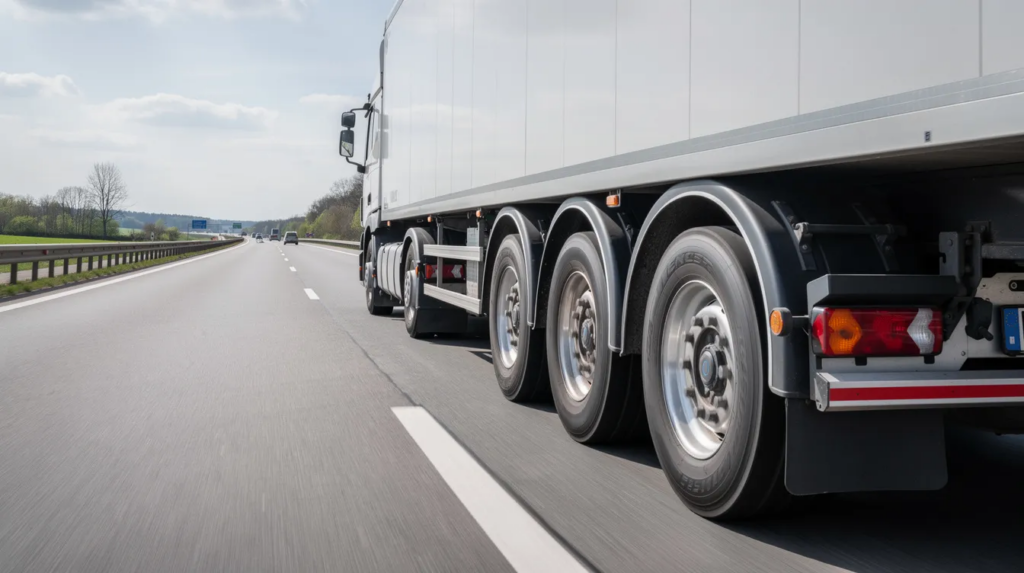
Horse transporter breakdown on the A8 near Munich – animal-friendly breakdown assistance and replacement transport by LKWHelp24.
n
The Emergency: A Breeding Transport Stranded With Live Cargo on Board
n
The vehicle involved was an articulated horse transporter, a tractor unit paired with a purpose-built horse trailer, operated by a Belgian breeding business moving horses through Germany. Exactly the kind of long-distance haul where every stop, every delay and every jolt matters more than it would for freight that cannot feel any of it.
n
Somewhere on the A8 near Munich, in the direction of Salzburg, the driver noticed the problem: a loss of coolant or oil from the engine. Not a tyre, not an electrical fault that could be jumped and driven on, but a fluid leak serious enough that continuing was not an option. The tractor unit pulled onto the hard shoulder. The horses were still inside the trailer, and the police were called to secure the scene, since a stationary lorry on a live autobahn lane is a hazard in its own right, for the people on board and for everyone else on the road.
n
At this point the case stopped being a simple mechanical breakdown and became something closer to an animal transport incident with a mechanical trigger. The driver could not simply wait for a mobile mechanic and hope for a quick fix. The horses needed attention regardless of how long the tractor unit took to sort out, and the clock on their welfare was running faster than the clock on the repair.
n
How Help Was Organised
n
LKWHelp24 works through a network of vetted recovery and breakdown partners across Germany, and this is precisely the type of case where that network earns its keep. A single mobile mechanic with a toolbox is not enough when you are dealing with a fluid leak on a heavy tractor unit and a trailer full of horses that cannot be left standing indefinitely.
n
The response was built around two parallel tracks running at the same time, rather than one after the other:
n
● A local recovery and towing partner in the Munich area was dispatched immediately once the call came in, with police already informed so the hard shoulder could be secured properly before anyone worked next to live traffic.
n● While the recovery crew was en route, coordination began on the harder problem: how to keep the horses’ journey moving without waiting for the defective tractor unit to be fixed or fully diagnosed roadside.
n● On site, the team assessed the mechanical damage quickly and confirmed what was already suspected, this was not something to patch up on the hard shoulder. A coolant or oil leak of this kind on a heavy tractor unit is a workshop repair, not a roadside one.
n● Once that was clear, the focus shifted entirely to arranging a replacement tractor unit that could be coupled to the horse trailer, so the animals would not have to be transferred, unloaded, or kept waiting for a lengthy repair.
n● Throughout, someone stayed with the horses, checking they had ventilation and access to water, and working to keep the situation as calm as the circumstances allowed.
n
This is the part that separates ordinary breakdown recovery from animal-aware breakdown recovery. It would have been quicker, on paper, to simply tow the whole rig including the trailer to a workshop and sort out the mechanical side first. But that would have meant hours more standing time for the horses in a stationary trailer at the roadside, which is precisely what a good welfare-led response tries to avoid. Getting a replacement tractor unit to the trailer, rather than the trailer to a garage, kept the animals’ actual journey time to a minimum.
n
The Situation On-Site: Why This Needed More Than a Wrench
n
A tractor unit losing coolant or oil on the autobahn is not cosmetic. Run an engine like that for even a short distance further and you risk turning a repairable fault into a seized engine, which then turns a two or three hour delay into a multi-day one. So stopping when the driver did was the correct call, even though it meant the horses were now stationary on the hard shoulder of a busy motorway.
n
The team on site had two separate problems to solve, and they were not the same problem. The first was the vehicle: a defective tractor unit that needed to come off the road safely, which meant a proper heavy recovery tow, not a quick jump-start or fluid top-up. The second, and the one that actually drove the timeline, was the horses themselves.
n
Horses are large flight animals. They do not sit calmly and wait the way a pallet of goods does. Standing in a trailer next to fast-moving traffic, with unfamiliar noise, vibration and the smell of exhaust and diesel, is a genuinely stressful environment for them, and stress in horses can escalate quickly into kicking, scrambling, or attempts to move that risk injury inside a trailer that was never designed for that kind of movement. The longer they stood there, the higher that risk climbed. That is why the operation was run with the horses’ wellbeing as the variable that set the pace, not the mechanical repair.
n
Securing the scene with the police present, keeping the animals ventilated and watered, and working quickly but without rushing the actual coupling and safety checks, all of that had to happen in parallel rather than as a neat sequence of steps.
n
n
Step by Step: What the Recovery Team Actually Did
n
Step 1: Secure the scene. With police support, the hard shoulder was properly cordoned before anyone approached the vehicle or the trailer, protecting both the crew and the animals from passing traffic.
n
Step 2: Check on the horses first. Before touching the tractor unit, the priority was the animals, confirming ventilation, checking on their condition, and making sure water access was in place while the mechanical assessment got underway.
n
Step 3: Assess the mechanical fault. A quick but thorough check confirmed the coolant or oil loss was not something to be patched at the roadside. This was a decision point, not a delay, because getting it wrong in either direction (either wasting time trying to fix an unfixable fault, or unnecessarily condemning a repairable one) would have cost the horses more standing time.
n
Step 4: Organise the replacement tractor unit. Rather than waiting on repair parts or a tow to a distant workshop, the team arranged a replacement tractor unit to come to the trailer, so the horse box itself never had to be unloaded or moved onto a different trailer.
n
Step 5: Couple, check, and release. The defective tractor unit was uncoupled and taken away for recovery, the replacement was coupled to the horse trailer with the same safety checks any coupling requires, and the transport was cleared to continue once everything was confirmed secure.
n
Nothing here is a fast miracle. It is closer to disciplined triage: treat the urgent problem (the animals) with continuous attention, treat the mechanical problem with proper judgement rather than guesswork, and choose the recovery method that gets the cargo moving soonest rather than the one that looks simplest on a job sheet.
n
Full Timeline
n
| Time | Phase | Action |
|---|---|---|
| 08:40 | Call received | Driver reports breakdown with horses on board, A8 near Munich |
| 08:52 | Partner dispatched | Local recovery partner assigned, ETA confirmed, police informed |
| 09:35 | On site | Recovery team arrives at the hard shoulder |
| 09:45 | Scene and animals secured | Site secured with police, horses checked, mechanical damage assessed |
| 10:20 | Replacement arranged | Replacement tractor unit organised, trailer prepared for coupling |
| 11:05 | Recovery of defective unit | Tractor unit uncoupled and taken away for recovery |
| 11:40 | Journey resumes | Horse trailer continues its journey with the replacement tractor unit |
n
Total time from call to the horses being back on the road: roughly three hours, with about two hours of that spent working on site. For a case involving live animals, a defective heavy tractor unit and the organisation of a replacement vehicle, that is a genuinely tight turnaround, and it only happens when the dispatch and the on-site assessment run at the same time rather than waiting on each other.
n
Cost
n
| Item | Price (EUR) |
|---|---|
| Call-out, 24/7 recovery and breakdown response | 190 |
| Towing of the defective tractor unit | 760 |
| Securing the scene, animal welfare handling and coordination of replacement transport | 260 |
| TOTAL | 1,210 EUR |
n
The final figure depends on distance, standing time and whatever replacement transport is required, so this is a representative cost for this specific case rather than a fixed tariff. The heaviest single item, unsurprisingly, is the actual towing of the tractor unit, since heavy recovery equipment and a properly qualified crew are not cheap to mobilise. The welfare handling and coordination fee reflects something that does not show up in an ordinary breakdown case at all: someone dedicated to the animals’ condition throughout, and the logistics of sourcing a replacement tractor unit at short notice rather than simply waiting for a repair slot.
n
Compare that to the alternative of towing the whole rig, trailer and all, to a workshop and waiting for a repair. That route would likely have meant several more hours of standing time for the horses, additional distance covered by a low-loader or heavy tow rather than a straightforward tractor swap, and no guarantee the workshop could turn the repair around quickly. The 1,210 euro figure bought a faster resolution and, more importantly, a shorter ordeal for the animals.
n
n
Why a Professional Service Is Essential for Animal Transport Breakdowns
n
It is tempting to think a breakdown is a breakdown, and any competent mechanic or towing firm can handle it. That is not quite true once live animals are involved.
n
-
n
- A generalist towing firm may not have experience coordinating with a driver, a police unit and a replacement vehicle supplier at the same time, which is exactly what this case demanded.
- Handling animals under stress requires a level of calm and awareness that a purely mechanical mindset does not automatically provide. Rushing, loud noise or clumsy movement around a trailer full of anxious horses can make things considerably worse.
- Getting the mechanical judgement wrong, either overestimating a fault as unfixable or underestimating one as fixable, wastes time the animals do not have.
- Sourcing a replacement tractor unit at short notice, on a Sunday or in the middle of the night, requires an established partner network. Without one, a driver is often stuck waiting for a standard repair regardless of what is in the trailer behind them.
- Documentation and coordination matter too. Police involvement, insurance considerations and the logistics of a breeding operation crossing international borders all need to be handled correctly, not improvised.
n
n
n
n
n
n
This is why LKWHelp24 treats animal transport breakdowns as a distinct category, not a variant of an ordinary lorry breakdown.
n
Typical Breakdown Situations We Handle Across Germany
n
LKWHelp24 coordinates roadside assistance, recovery and towing for commercial vehicles all across Germany, 24 hours a day. The cases we see regularly include:
n
-
n
- Tyre blowouts and punctures on articulated lorries and trailers on the autobahn network
- Engine faults, including coolant and oil leaks like the one in this case
- Heavy recovery of lorries stuck in mud, ditches or waterlogged ground
- Coach and passenger transport breakdowns, including low-loader recovery on mountain routes
- Livestock and animal transport breakdowns requiring welfare-sensitive handling, as described here
- Coordination of replacement vehicles and cargo transfers when repair on site is not viable
n
n
n
n
n
n
n
Whatever the vehicle and whatever it is carrying, the same underlying principle applies: assess honestly, act quickly, and choose the route that minimises the real cost, not just the visible one.
n
n
Prevention Tips for Fleets and Drivers Transporting Animals
n
-
n
- Build extra time into any long-distance animal transport route for pre-departure vehicle checks, particularly coolant levels, oil levels and tyre condition. A ten minute inspection before setting off is far cheaper than a three hour recovery.
- Keep a record of your breakdown assistance provider’s contact details in the cab, not just in an app that might not have signal on a quiet stretch of autobahn.
- Carry basic welfare supplies for the animals on board, including water and anything needed to keep them calm, in case of an unplanned stop.
- Know your route’s recovery partner coverage in advance if you are operating internationally. A German or Austrian breakdown partner will have a very different response time and capability to one based elsewhere.
- Train drivers to recognise early warning signs, unusual temperature gauge readings, dashboard warnings, or fluid smells, rather than pushing on and hoping the problem resolves itself.
- Have a plan for the “what if the vehicle cannot be fixed roadside” scenario before you are in it. Knowing in advance that a replacement tractor unit is a realistic option, rather than discovering it under pressure, saves time when it matters.
n
n
n
n
n
n
n
Fleet Maintenance and Vehicle Reliability for Long-Distance Transport
n
For breeding operations, equestrian transport businesses and any fleet regularly covering long distances with sensitive cargo, reliability is not a nice-to-have. A single coolant leak on the wrong stretch of motorway can turn a routine animal transport delivery into a welfare incident, a reputational problem and an unplanned five-figure cost once you account for recovery, replacement transport, potential veterinary attention and the knock-on delay to the rest of the schedule.
n
Regular maintenance intervals matter more for vehicles hauling live cargo than for standard freight, simply because the tolerance for delay is lower. Coolant and oil systems in particular deserve closer attention on tractor units doing high-mileage international work, since a slow leak that would be a minor annoyance on a short domestic run can become a serious problem hundreds of kilometres from home. Fleets that build in proactive fluid checks, rather than relying purely on scheduled service intervals, tend to catch these issues at the depot rather than on the hard shoulder.
n
It is also worth having a relationship with a breakdown assistance provider before you need one. Knowing that a call to LKWHelp24 connects you to a network capable of arranging both heavy recovery and a replacement tractor unit, rather than just a tow truck, is the kind of preparation that pays for itself the one time it is needed.
n
LKWHelp24: Your Truck Emergency Partner, Including for Live Cargo
n
LKWHelp24 provides 24/7 breakdown assistance, recovery and towing across the whole of Germany, working through a network of certified regional partners rather than a single fixed fleet. That structure is exactly what made this case possible: a local recovery partner near Munich able to respond within roughly an hour, combined with the ability to coordinate a replacement tractor unit rather than defaulting to the slowest possible option.
n
-
n
- Genuine 24/7 availability, including weekends and holidays, when breakdowns involving live animals cannot simply wait until Monday morning
- A vetted partner network across Germany, meaning response times stay realistic even outside major cities
- Transparent, itemised pricing, as shown in the cost table above, so there are no surprises after the job is done
- Multilingual coordination, relevant for international hauliers and breeding operations crossing multiple borders
- Experience specifically with animal welfare considerations during breakdown response, not just mechanical recovery
n
n
n
n
n
n
n
Summary
n
-
n
- Vehicle: articulated horse transporter, Belgian breeding operation, live horses on board
- Location: A8 near Munich, hard shoulder, direction Salzburg
- Problem: coolant or oil leak from the tractor unit, vehicle unable to continue
- Response time: partner dispatched within 12 minutes of the call, on site within under an hour
- Total time from call to journey resumed: roughly three hours, around two hours on site
- Resolution: defective tractor unit towed away, replacement tractor unit coupled to the horse trailer so the animals did not need to be unloaded
- Total cost: 1,210 EUR
- Secondary damage: none reported
- Outcome: horses continued their journey safely, with standing time kept to a minimum throughout
n
n
n
n
n
n
n
n
n
n
Request Emergency Assistance Now
n
If you are dealing with a breakdown involving livestock, breeding animals or any time-sensitive cargo anywhere in Germany, call LKWHelp24 on +49 160 5753826 or visit lkwhelp24.com. Available 24/7 across all of Germany.
n
n
You might also be interested in
n
-
n
- Heavy Recovery on the A8 Near Stuttgart: Scania Car Transporter Recovery
- Coach Transport on a Low Loader: Mountain Route Recovery
- Truck Recovery from Mud: Actros on Waterlogged Ground
- Engine Breakdown on the A5 Near Frankfurt: Coolant Hose Failure
n
n
n
n
n
For further reading on general breakdown assistance for lorries in Germany, see the ADAC guide to lorry breakdown assistance, and for the legal side of transporting animals by road, see ADAC’s overview of animal transport rules.