Skip to content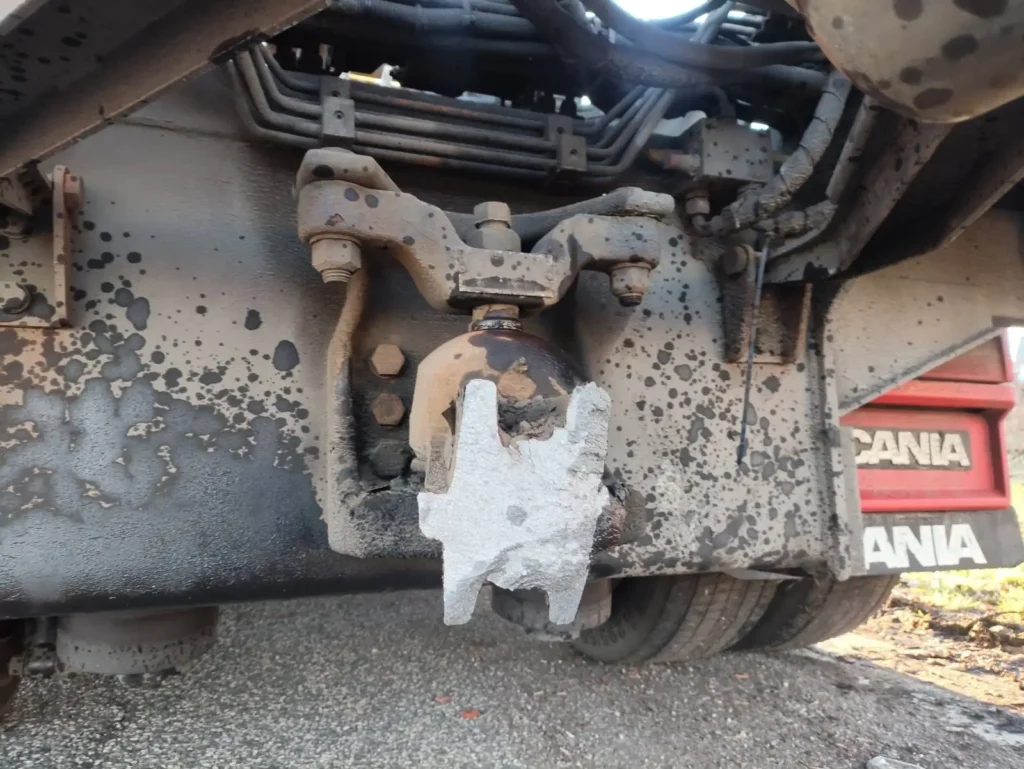
When a fully loaded car transporter breaks down on one of Germany\’s busiest motorways, the clock starts ticking the moment the hazard lights go on. Every minute on the hard shoulder is a minute of exposure — to passing traffic, to weather, to the risk of a much worse accident happening behind a stationary rig. For hauliers running vehicle logistics, there\’s an added layer of pressure: it isn\’t just a lorry sitting idle, it\’s someone else\’s cars sitting idle too, strapped to a deck that can\’t move another metre.
n
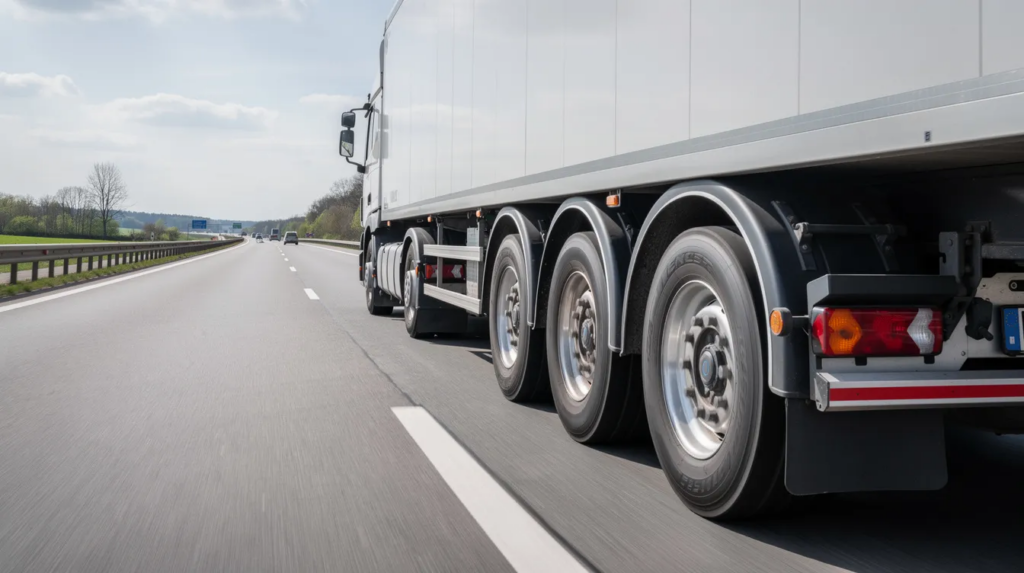
That\’s exactly the situation LKWHelp24 was called into on the A8 near Stuttgart. A Scania tractor unit pulling a car transporter trailer, several vehicles loaded and secured on board, suffered a structural failure in its suspension. Not a tyre, not an electrical fault — a broken spring mount, the bracket that holds the leaf spring to the chassis and keeps the axle where it should be. Once that goes, a lorry isn\’t drivable, full stop. No roadside bodge fixes that. What follows is the full account of how our partner network got a heavy recovery vehicle on scene, secured a loaded transporter, and had the whole rig — cargo and all — safely delivered to a workshop in under three hours.
n
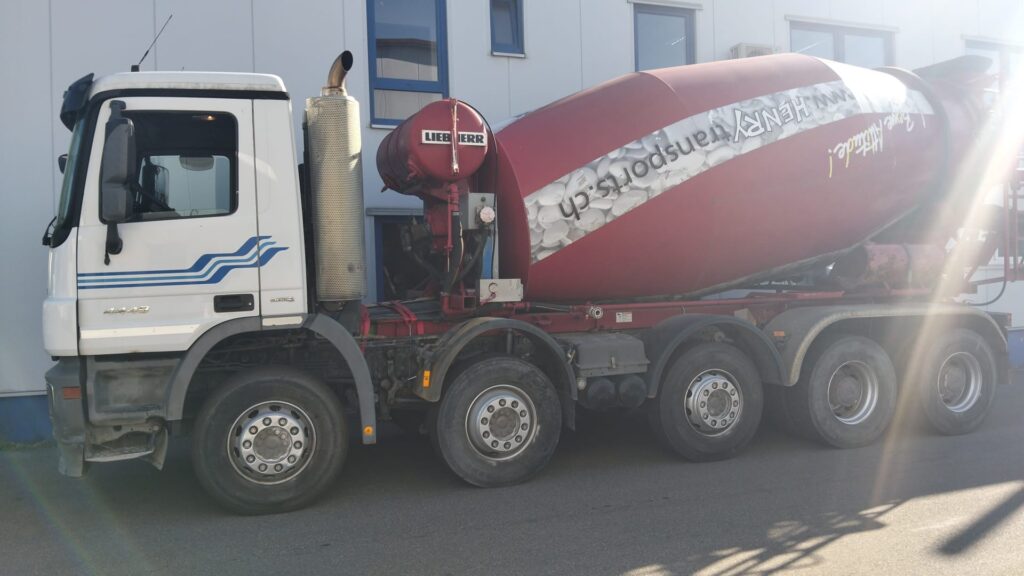
Heavy recovery on the A8 near Stuttgart – Scania car transporter with a broken spring mount on the chassis.
n
The Emergency: A Broken Spring Mount on the Hard Shoulder
n
The driver was heading south towards Munich on the A8 when he noticed the tractor unit pulling to one side and a metallic knock coming from underneath the chassis. He did the right thing immediately — hazard lights on, warning triangle out, and onto the hard shoulder before the handling got any worse. A quick look underneath confirmed his fear: the spring mount, sometimes called the leaf spring bracket or shackle mount, had cracked clean through.
n
This is a serious failure. The spring mount is what anchors the suspension to the chassis rail and keeps the axle correctly located under load. Once it fails, the axle can shift out of alignment, the leaf spring loses its fixing point, and the whole suspension geometry on that side becomes unreliable. On a solo lorry that\’s bad enough. On a Scania hauling a fully laden car transporter — with several passenger vehicles chained down on the upper and lower decks — it\’s a different order of risk entirely. Any further movement, any attempt to limp on to the next services, could have shifted the load, damaged the cars on board, or caused the axle to fail outright at speed. This wasn\’t a job for a mobile mechanic with a torque wrench. This was a job for heavy recovery — controlled towing, not roadside repair.
n
The driver rang LKWHelp24. Within minutes he had a dispatcher on the line who understood exactly what a broken spring mount on a loaded car transporter meant and who already knew which partner in the Stuttgart area had the right kit for the job.
n
How Help Was Organised
n
LKWHelp24 doesn\’t run our own fleet of heavy recovery trucks in every corner of Germany — we don\’t need to. What we run is a vetted network of towing and abschleppdienst partners covering the whole country, so that whichever motorway a driver breaks down on, there\’s someone qualified within reach. For a job like this, the dispatch process looked like this:
n
● Driver\’s call logged: location (A8, hard shoulder, direction Munich), vehicle type (Scania tractor + car transporter trailer, loaded), and nature of the fault (suspension failure, spring mount broken, vehicle immobile)
n● Immediate flag as a heavy recovery case, not a standard breakdown — this rules out light-duty tow trucks and routes the job straight to a partner equipped for loaded semi-trailer recovery
n● Nearest qualified heavy recovery partner in the Stuttgart area contacted directly and briefed on the load (multiple vehicles on board, need for careful handling)
n● ETA confirmed and relayed back to the driver so he knew exactly how long he\’d be waiting and could keep the cargo owners informed
n● Continuous contact maintained between dispatcher and recovery crew until the vehicle was safely in the workshop
n
The whole point of this system is speed without guesswork. A driver stuck on the hard shoulder with a dead axle doesn\’t need to be making phone calls to five different towing companies hoping one of them has a heavy-duty rig free. One call to LKWHelp24, and the right partner is already on the way.
n
The Situation On-Site
n
By the time the recovery crew reached the scene, roughly 55 minutes after the initial call, the priority was clear: secure the site, secure the load, and assess exactly how bad the damage was before touching anything.
n
A car transporter carrying several vehicles is not a simple tow job. Each car on board is individually strapped down, and any sudden movement of the trailer — a jolt, an uneven lift, an unbalanced hook-up — risks those straps shifting or a vehicle rolling against its neighbour. So the first job wasn\’t mechanical, it was logistical: confirming the load was still properly secured and that nothing had moved when the axle failed.
n
With the site marked out and traffic behind the vehicle managed, the crew got underneath to look at the spring mount itself. The break was clean through the bracket casting — not a job that can be welded or bolted back together at the roadside, and certainly not something you send a lorry back onto the autobahn with. Structural suspension components like this have to be replaced properly, under controlled conditions, in a workshop with the right jacking equipment and parts on hand. Attempting a temporary fix here would have been reckless, both for the driver and for anyone else on the A8 that afternoon.
n

n
Step-by-Step: From Assessment to Workshop Handover
n
Step 1 — Site and load security. Before any tools came out, the crew confirmed the trailer and its cargo were stable, checked the straps on each vehicle, and set up proper warning measures for approaching traffic on a live motorway.
n
Step 2 — Damage assessment. A full check underneath the chassis confirmed the spring mount was fractured, the axle had shifted out of its correct position, and there was no safe way to move the vehicle under its own power.
n
Step 3 — Load-bearing preparation. The affected axle had to be relieved of load and mechanically secured before the recovery vehicle could lift and tow. This step is where experience really counts — get it wrong and you risk further damage to the chassis or, worse, to the cars strapped on top.
n
Step 4 — Coupling and lift. The Scania tractor and its fully loaded transporter trailer were taken up by the heavy recovery vehicle as a single unit, rather than trying to separate tractor from trailer at the roadside, which would have added time and risk with a loaded semi-trailer.
n
Step 5 — Transport and handover. The whole rig, cars still on board, was towed to the partner workshop in Stuttgart, where it was handed over along with the driver\’s paperwork and a full account of the damage for the repair team.
n
Nothing about this job was rushed, and nothing about it was left to chance. That\’s the difference between a mobile repair — swap a part, check the torque, back on the road — and a proper heavy recovery, where the goal is simply to get a broken vehicle and its cargo somewhere it can be fixed safely.
n
Full Timeline
n
| Time | Phase | Action |
|---|---|---|
| 14:30 | Call received | Driver contacts LKWHelp24, reports suspension failure on A8 |
| 14:42 | Dispatch | Heavy recovery partner assigned, ETA confirmed and sent to driver |
| 15:25 | Arrival | Recovery vehicle reaches the scene on the A8 hard shoulder |
| 15:35 | Assessment | Site and load secured, damage to spring mount inspected and confirmed |
| 16:05 | Preparation | Vehicle prepared for towing, affected axle relieved and secured |
| 16:25 | Recovery | Scania tractor and loaded transporter trailer lifted and towed as one unit |
| 17:10 | Handover | Rig delivered to partner workshop in Stuttgart |
n
Total time, call to workshop: approximately 2 hours 40 minutes. Time on site: roughly 50 minutes.
n
For a heavy recovery involving a loaded car transporter on a live motorway, that\’s a genuinely fast turnaround — and every minute of it was spent either moving towards a solution or making sure nothing got damaged along the way.
n
Cost Breakdown
n
| Item | Price (EUR) |
|---|---|
| Call-out, 24/7 heavy recovery service | 180 |
| Heavy towing — tractor unit + loaded trailer | 780 |
| Securing and recovery work on-site | 220 |
| TOTAL | 1180 |
n
The final price on a job like this depends on a few variable factors: distance to the workshop, the total weight being recovered (a loaded car transporter is considerably heavier than an empty one), and how much time the crew needs to spend on-site securing the load before towing can even start. A straightforward tow of an empty tractor might cost less; a heavy recovery of a loaded semi-trailer on a motorway, requiring careful handling of cargo, sits at the upper end of the scale — but it\’s still a fraction of what a damaged load or a secondary accident would cost.
n
Compare that to the alternative: a driver attempting to nurse a lorry with a broken axle mount to the next services, risking the cargo, the vehicle, and potentially causing a far more expensive incident on the autobahn. €1,180 for a controlled, professional recovery is money well spent against that scenario.
n

n
Why a Professional Service Is Essential
n
A broken spring mount is not something anyone should attempt to work around at the roadside, and it\’s worth being blunt about why:
n
-
n
- The axle can shift further under any load or movement, turning a contained mechanical failure into a much bigger structural problem
- Towing a semi-trailer incorrectly can damage the coupling, the chassis, or the cargo, especially with a car transporter where every strap point matters
- Improvised fixes don\’t hold — a cracked bracket welded roadside with no proper equipment is a hazard waiting to fail again, potentially at speed
- Insurance and liability — a professional recovery with proper documentation protects the driver, the haulier, and the cargo owner if there\’s any dispute later
- Loaded car transporters carry other people\’s property — getting the recovery wrong doesn\’t just risk a lorry, it risks every vehicle strapped to the deck
n
n
n
n
n
n
This is precisely why LKWHelp24 routes suspension and chassis failures straight to heavy recovery specialists rather than treating them as a standard roadside job. Some faults you fix on the hard shoulder. Others you tow, properly, the first time.
n
Typical Breakdown Situations We Handle Across Germany
n
Heavy recovery like this Scania case is only one part of what our partner network covers, day and night, across every autobahn and B-road in the country:
n
-
n
- Tyre blowouts and punctures on lorries, trailers, and transporters
- Suspension and axle failures requiring full towing
- Engine breakdowns and electrical faults
- Coach and bus breakdowns, including mountain and low-loader recovery
- Vehicle transport and car transporter incidents, exactly like this one
- Recovery from soft ground, mud, and off-road situations
- Battery and starting problems
- Accident recovery and vehicle removal from live carriageways
n
n
n
n
n
n
n
n
n
Wherever a truck, coach, or transporter comes to a stop on German roads, there\’s a partner within reach who can get there fast.
n

n
Prevention Tips for Fleets and Drivers
n
While a suspension bracket failure can happen with no obvious warning, there are things fleet operators and drivers can do to reduce the risk:
n
-
n
- Include suspension components in routine inspections, not just brakes and tyres — spring mounts, shackle pins, and U-bolts take constant stress and fatigue over time
- Watch for early warning signs: unusual noises from underneath, uneven ride height, or a vehicle pulling to one side under braking
- Don\’t ignore small knocks or clunks — a hairline crack in a bracket today is a full fracture on the motorway next week
- Keep load distribution even, particularly on car transporters, since uneven weight puts extra strain on one side of the suspension
- Log mileage-based inspection intervals for chassis and suspension, not just engine and drivetrain servicing
- Train drivers to stop immediately at the first sign of handling trouble rather than trying to reach the next services — exactly what this driver did, and exactly why the situation didn\’t get any worse
n
n
n
n
n
n
n
Fleet Maintenance and Component Reliability
n
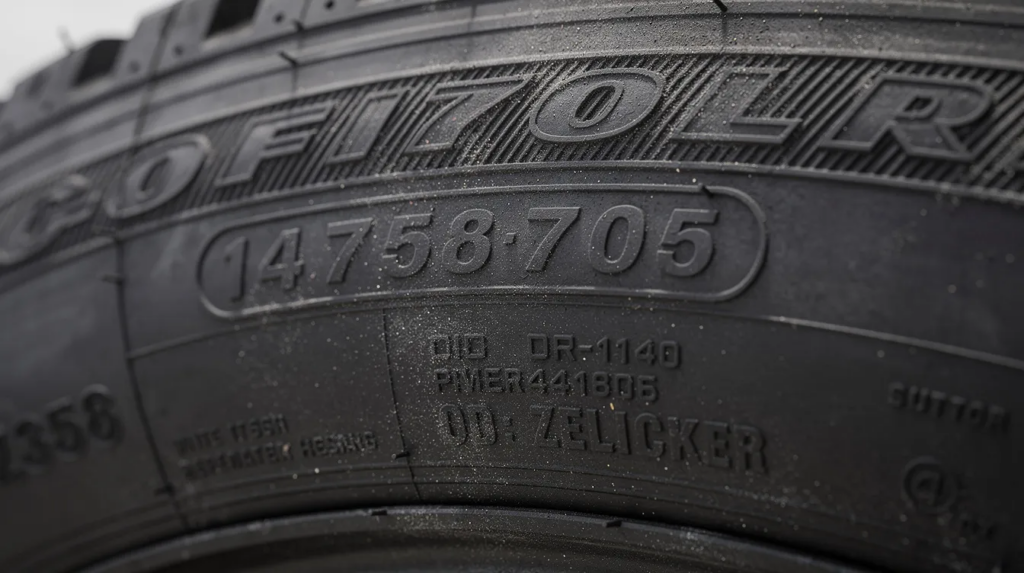
Suspension failures like this one are a reminder that fleet maintenance isn\’t only about tyres and brakes, though those matter enormously too. Reliable tyre brands such as Michelin, Continental, and Goodyear are the obvious first line of defence against roadside breakdowns, and any operator serious about uptime should be running on tyres from manufacturers with a proven track record on heavy vehicles. But chassis and suspension components deserve the same level of attention. A spring mount is a relatively small, unglamorous part of the vehicle — until it fails, at which point it\’s the difference between a lorry that drives and one that has to be towed.
n
For hauliers running car transporters specifically, the stakes are higher still. You\’re not just responsible for your own vehicle; you\’re responsible for every car strapped to the deck. That means suspension inspections, load security checks, and a genuine relationship with a recovery partner who understands vehicle logistics — not just standard freight — matter more than they might for a general haulage operation.
n
LKWHelp24: Your Truck Emergency Partner
n
This case is a good example of exactly what LKWHelp24 exists to do. We\’re not the ones who show up with the recovery truck — we\’re the ones who make sure the right recovery truck shows up, fast, wherever you are in Germany.
n
-
n
- 24/7 availability across the whole of Germany — motorways, rural roads, industrial estates, wherever the breakdown happens
- A vetted partner network, not a random directory — every partner we dispatch has been checked for the right equipment and experience
- Fast, informed dispatch — our team understands the difference between a tyre job and a heavy recovery, and routes accordingly from the first phone call
- Transparent pricing, agreed and confirmed before work begins, no surprises on the invoice
- Multilingual support, because breakdowns don\’t wait for a driver to find someone who speaks their language
- Experience with complex cargo, including car transporters, coaches, and abnormal loads, where getting the recovery wrong has consequences beyond the lorry itself
n
n
n
n
n
n
n

n
Summary
n
-
n
- Vehicle: Scania tractor unit with loaded car transporter trailer
- Fault: Broken spring mount (leaf spring bracket), suspension/chassis failure — not a tyre issue
- Location: A8, hard shoulder near Stuttgart, direction Munich
- Response time: Recovery vehicle on scene within 55 minutes of the call
- Total time, call to workshop: approximately 2 hours 40 minutes
- Total cost: €1,180
- Secondary damage: None — chassis component required workshop replacement, cargo delivered undamaged
n
n
n
n
n
n
n
n
Request Emergency Assistance Now
n
If you\’re dealing with a breakdown, a suspension failure, or any situation where your truck, trailer, or transporter can\’t move safely, don\’t wait. Call +49 160 5753826 or visit lkwhelp24.com.
n
Available 24/7 across all of Germany.
n
n
You might also be interested in
n
-
n
- Truck Recovery from Mud: Actros Stuck on Waterlogged Ground
- Vehicle Logistics Across Europe: A Car Transporter Job Report
- Coach Transport on a Low-Loader: Mountain Recovery with LKWHelp24
- Truck Tyre Service Near Me: How LKWHelp24 Fixed a Semi-Truck Blowout on the A2 Near Hannover in 1 Hour 42 Minutes
n
n
n
n