Skip to content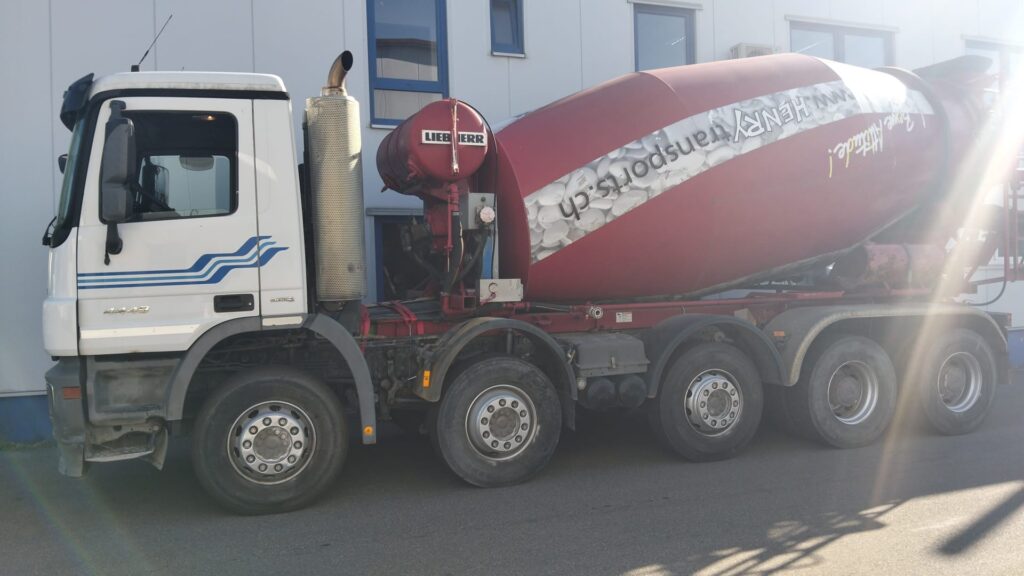
TL;DR: On 15 August 2026, the gearbox on a concrete mixer truck failed completely at a concrete batching plant near Sindelfingen, Baden-Württemberg. The 8-cubic-metre drum vehicle could no longer move under its own power. From call to secure yard, the job took 2 hours 25 minutes. The team first checked the remaining concrete in the drum, then recovered the vehicle with heavy-lift equipment to a secure holding yard rather than straight to a workshop. Total cost: €1,760 net.
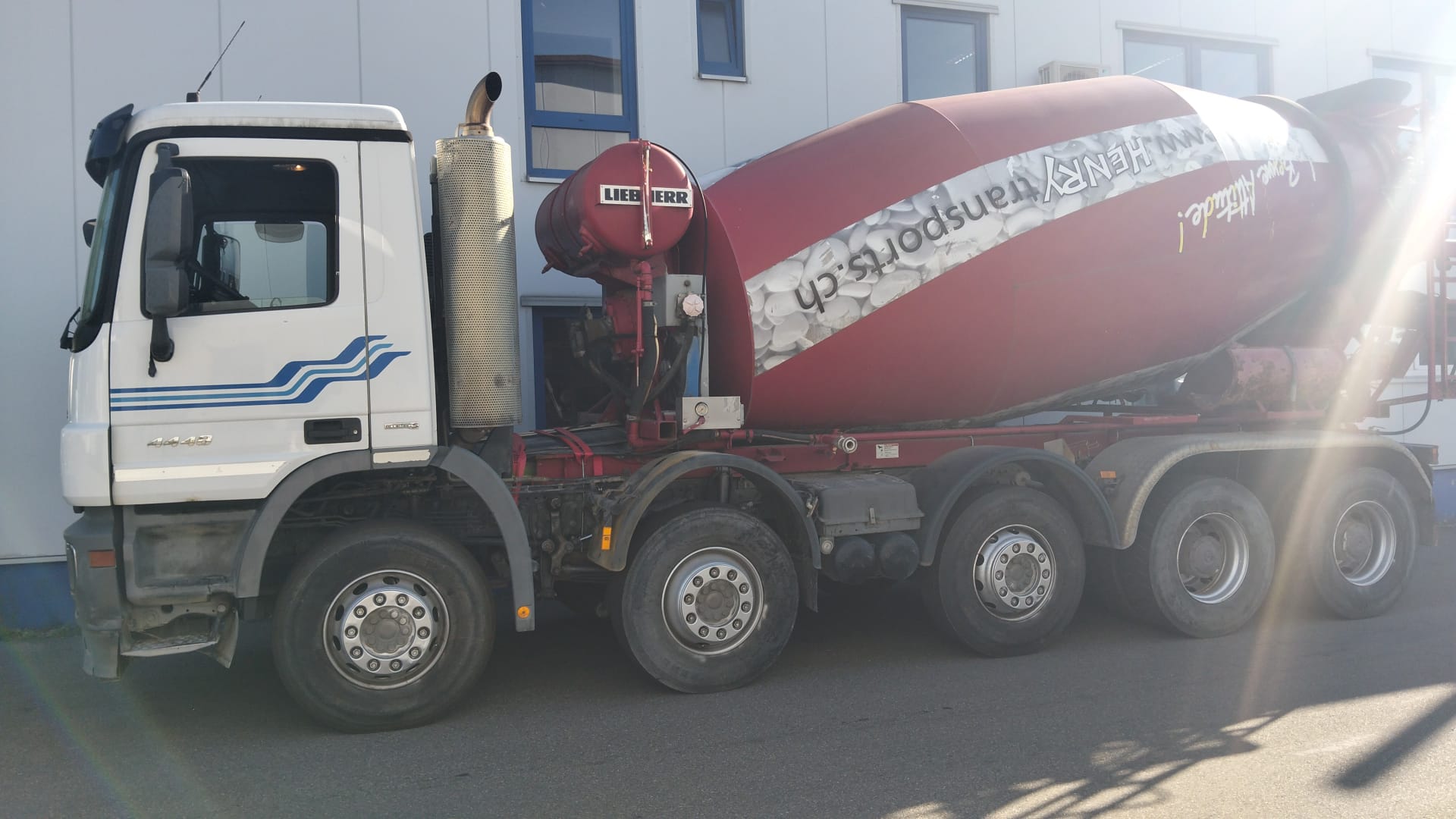
Why a Gearbox Failure on a Concrete Mixer Is Not a Routine Breakdown
A concrete mixer truck is not an ordinary lorry with cargo. It carries a rotating drum loaded with several tonnes of fresh concrete, and that concrete starts changing the moment the drum stops turning. When the gearbox fails, it’s not just the vehicle that’s stuck — the clock on the concrete starts running too. That dual pressure is what separates a mixer recovery from a standard tractor-unit breakdown.
On Friday 15 August, a batching plant near Sindelfingen called in a concrete mixer whose gearbox had given out mid-manoeuvre on site. The vehicle was blocking the yard access, and the plant needed the space back for ongoing operations. This wasn’t a motorway case — it was one where time pressure came from two directions at once: the concrete inside the drum, and the plant’s own working schedule.
This report walks through why the dispatcher’s first question wasn’t “when can the recovery truck arrive,” but “how much concrete is still in the drum, and for how long has it been sitting still.”
What Actually Happened at the Batching Plant Near Sindelfingen
The concrete mixer was on the yard of a batching plant near Sindelfingen, Baden-Württemberg. While manoeuvring between the mixing plant and the exit, the gearbox stopped responding — no gear engagement, and the vehicle could no longer move under its own power. A straightforward drivetrain failure, not a collision, not a tyre issue.
For a batching plant, this is more than a minor inconvenience. The spot where the mixer stalled was needed for loading other vehicles. At the same time, the drum was partially loaded when the failure occurred, and the exact remaining volume had to be established on site before any thought could be given to recovering the vehicle itself.
LKW Help 24’s dispatch took the call mid-morning. The first question asked: is there still concrete in the drum, is it still turning, and how long has it been stationary? Those three facts determine the whole sequence of a mixer recovery — not which recovery truck can arrive fastest.
Why the Concrete in the Drum Is the Most Urgent Question
With a disabled concrete mixer, the first priority is not the vehicle — it’s the concrete sitting in the drum. Once the drum stops turning, the mix starts to set, depending on the concrete grade, ambient temperature, and any admixtures. Left standing for hours, the concrete can harden into a solid block, and the drum then has to be chiselled out by hand or replaced entirely — a repair that can quickly run into five-figure sums.
That’s why dispatch asks about drum condition before route planning on every mixer call-out. A batching plant crew generally knows this logic themselves, but under the stress of a breakdown it’s easy to overlook — attention naturally goes to the stuck vehicle first, not the load inside it.
In this case, the mixing drum could no longer be turned once the gearbox failed, since on many concrete mixer chassis the drum drive runs off the vehicle engine or a power take-off. Without a working drivetrain, the drum often can’t be rotated at all — exactly the condition that makes the concrete clock run fastest.
How Much Time Is There Before Concrete in the Drum Sets?
The time before concrete sets depends on the mix design, outside temperature, and any admixtures — there’s no single number that applies to every job. In summer temperatures like those seen in mid-August in Baden-Württemberg, the available window shrinks noticeably compared with a cool autumn day. Retarding admixtures extend workable time; heat and fast-setting mixes cut it short.
The rule of thumb on site: in summer, a stalled drum is measured in hours, not days. That’s what fundamentally separates a mixer recovery from a tractor unit hauling dry freight, where a day’s delay is “only” a financial loss rather than a technical write-off of the drum itself.
That’s why the first action on 15 August wasn’t rigging up the recovery equipment — it was establishing how much concrete remained in the drum and whether it could be discharged on site.
What Happens First: Discharging and Flushing the Drum Before Recovery
Before a disabled mixer is moved, the crew establishes whether the remaining concrete can be discharged or the drum flushed out on site. At a batching plant, this is usually far easier than on a motorway hard shoulder, since disposal and wash-down facilities are typically right there.
Only once that question is settled does the actual vehicle recovery planning begin. This order — secure the load first, then the vehicle — isn’t a minor detail with mixer trucks; it’s the difference between a recovery with manageable costs and a total loss of the drum.
In this case, the plant itself was able to manage the leftover concrete, since the necessary infrastructure was already on site. For the recovery crew, that meant full attention could go to the disabled vehicle, without needing an improvised disposal solution on the fly.
How Dispatch Organised the Job
Once the call came in, the organisation followed clear steps:
- Initial call: location, vehicle type, drum condition, and mobility status confirmed.
- Classified as a heavy recovery case: a concrete mixer isn’t dispatched like a standard tractor unit — weight and body design call for specialist equipment.
- Partner crew assigned: a team from the regional partner network with equipment rated for high loads was mobilised.
- Timeframe communicated: a realistic arrival window was given to the batching plant so operations could plan around it.
- On-site handover: on arrival, direct coordination with plant staff on drum condition and available space.
This structure — assess, then mobilise, then communicate — is why less than an hour passed between the call and the recovery crew’s arrival, despite this being a heavy-lift case.
Why Gearboxes Fail More Often on Concrete Mixers Than on Long-Haul Trucks
A concrete mixer working a construction site experiences a completely different load profile than a tractor unit running long-haul routes. On the motorway, long, steady driving dominates. On and around building sites, it’s constant manoeuvring, uneven ground, slopes across yard surfaces, and frequent pull-aways from a standstill carrying 8 to 12 cubic metres of concrete.
Add the power take-off driving the drum, which places extra load on the drivetrain, often at the same time as the vehicle is moving. This combination — frequent load changes, uneven terrain, mud and grit around site access, and the drivetrain constantly serving both propulsion and drum rotation — means gearboxes and clutches on mixer trucks reach their limits noticeably more often than on pure transport tractor units.
This isn’t a knock on any particular vehicle or manufacturer — it’s simply a function of the duty cycle. A mixer truck on average runs more full-load standing starts in a single day than a long-haul tractor covers in an entire shift.
The Challenge of Recovering a Concrete Mixer
A concrete mixer needs different recovery equipment than a standard tractor unit because its centre of gravity and overall mass are distributed completely differently. The drum sits high above the chassis and, even partially emptied, weighs considerably more than a comparable box body. Combined with the short wheelbase of many mixer chassis, the vehicle is far more prone to tipping or swaying during lifting or loading than a low-slung tractor unit.
For the recovery crew, that means standard tractor-unit gear won’t do. What’s needed is recovery equipment with sufficient load capacity and loading height for a high-centre-of-gravity vehicle, along with experienced crew who can correctly judge axle loads and tilt angle throughout the loading process.
On 15 August, a team with appropriately rated heavy-recovery equipment was assigned rather than a standard tow truck. The extra care taken during loading — slow winching, continuous checks on the tilt angle at every stage — cost a few extra minutes but ruled out any risk of the vehicle tipping during loading.
Why the Vehicle Went to a Secure Yard, Not Straight to a Workshop
The vehicle was taken to a secure holding yard rather than a repair workshop, because the plant’s site urgently needed to be cleared and choosing the right gearbox specialist takes time and coordination with the vehicle owner. On the surface, this decision looks unremarkable, but in practice it’s the standard path for complex drivetrain failures.
A gearbox failure isn’t a fault any workshop can simply take on at short notice — depending on the chassis manufacturer and the specific gearbox type, it requires the right parts, specialist staff, and often a booked slot. That decision is normally made by the vehicle owner, not the recovery crew on site. Until that’s settled, a secured holding yard is the sensible interim solution: the vehicle is out of the way, safely parked, and plant operations continue unaffected.
This logic — clear the site first, then sort the right workshop calmly — is more honest than promising an on-the-spot repair that, for a gearbox failure, was never realistic to begin with.
Why Construction Firms Feel Downtime Especially Hard in Summer
In mid-August, the construction season in Baden-Württemberg is running at full pace. Concrete pours are scheduled, often coordinated with several trades, weather windows, and delivery timetables for fresh concrete. If a mixer goes down, a planned pour can’t simply be pushed back — fresh concrete doesn’t wait for a rescheduled slot.
A blocked yard also affects more than just the disabled vehicle — it disrupts the whole exit schedule for other mixers on site. That’s exactly why clearing the yard quickly on 15 August mattered to the plant just as much as knowing when the vehicle would be roadworthy again.
Step by Step: How the Recovery Went
- Assessment: gearbox condition, position on site, and the state and quantity of remaining concrete in the drum checked.
- Drum content resolved: coordinated with plant staff on how to handle the remaining concrete before the vehicle was moved.
- Site security: area around the vehicle secured, access cleared for the recovery equipment.
- Loading preparation: lifting points on the chassis checked, centre of gravity and axle load calculated for the loading operation.
- Loading and transport: mixer loaded slowly and under control, transported to the agreed yard and parked properly.
Every one of these steps was logged and handed over, so the vehicle owner could go into the subsequent workshop conversation with complete information.
The Full Timeline
| Time | Phase | Action |
|---|---|---|
| 09:40 | Call | Gearbox failure reported at the batching plant |
| 09:52 | Dispatch | Partner team with heavy-recovery equipment assigned |
| 10:35 | Arrival | Recovery team arrives on the plant site |
| 10:35–10:50 | Assessment | Gearbox and drum condition checked |
| 10:50–11:20 | Securing | Site secured, loading prepared |
| 11:20–12:05 | Recovery | Mixer loaded and transported to the secure yard |
| 12:05 | Complete | Vehicle safely parked at the secure yard |
Total time from call to secure yard: 2 hours 25 minutes.
What the Recovery Cost
| Item | Price (EUR, net) |
|---|---|
| Call-out for heavy recovery | 240 |
| Site security at the plant | 80 |
| Recovery and loading of mixer (specialist equipment, high centre of gravity) | 1,290 |
| On-site time (drum check, securing, escort) | 150 |
| TOTAL | €1,760 |
All figures are net prices, plus VAT. The largest share of the cost sits with the recovery itself, because it requires specialist equipment with the right load capacity — a standard tow truck simply isn’t suitable, or safe, for a mixer with a high centre of gravity.
For comparison: a day’s site downtime caused by missing concrete can, depending on project size, cost considerably more than the entire recovery — before even factoring in penalty clauses for delayed construction phases. A fast, clean recovery is almost always cheaper economically than any delay.
Why an Untrained Person Shouldn’t Attempt to Recover a Mixer Alone
- Tip-over risk from the high centre of gravity: without a correct read on axle load and centre of gravity, the vehicle can tip during lifting.
- Wrong lifting points: a chassis built for special bodywork has different lifting points than a standard tractor unit — get them wrong and frame damage follows.
- Risk to the drum: improper handling can shift any remaining concrete unevenly inside the drum, changing the load’s balance during transport.
- Standard equipment lacks capacity: an ordinary tow truck often isn’t rated for the total mass of a loaded mixer.
- Liability exposure: damage during an improvised recovery quickly falls on the vehicle owner or driver, not on any subsequent insurance claim.
Typical Call-Outs Around Concrete Mixers and Site Vehicles in Germany
LKW Help 24 is called nationwide to similar situations: concrete mixers with drivetrain failures on construction sites and batching plants, tractor units stuck in mud on unpaved ground, or vehicles with gearbox failure at motorway car parks near the border. We also regularly handle winter recoveries of tractor units, heavy recoveries such as a Scania car transporter near Stuttgart, and rescues from difficult terrain like the 25-tonne Scania pulled from mud near Regensburg.
Every one of these jobs differs in the details, but the principle stays the same: assess the situation correctly first, then bring in the right equipment.
Prevention: What Construction Firms and Fleets Can Do
- Regular gearbox servicing tailored to concrete mixers, which run through many load changes and power-take-off cycles.
- Driver training on gentle manoeuvring across uneven site ground.
- Clear emergency procedures for a breakdown with a loaded drum — who decides on discharge, who calls for recovery.
- Concrete mix documentation kept accessible, so it’s immediately clear how much time remains before setting starts.
- A recovery partner on file before you need one, rather than searching mid-breakdown.
Tyres, Maintenance, and Fleet Care: The Bigger Picture
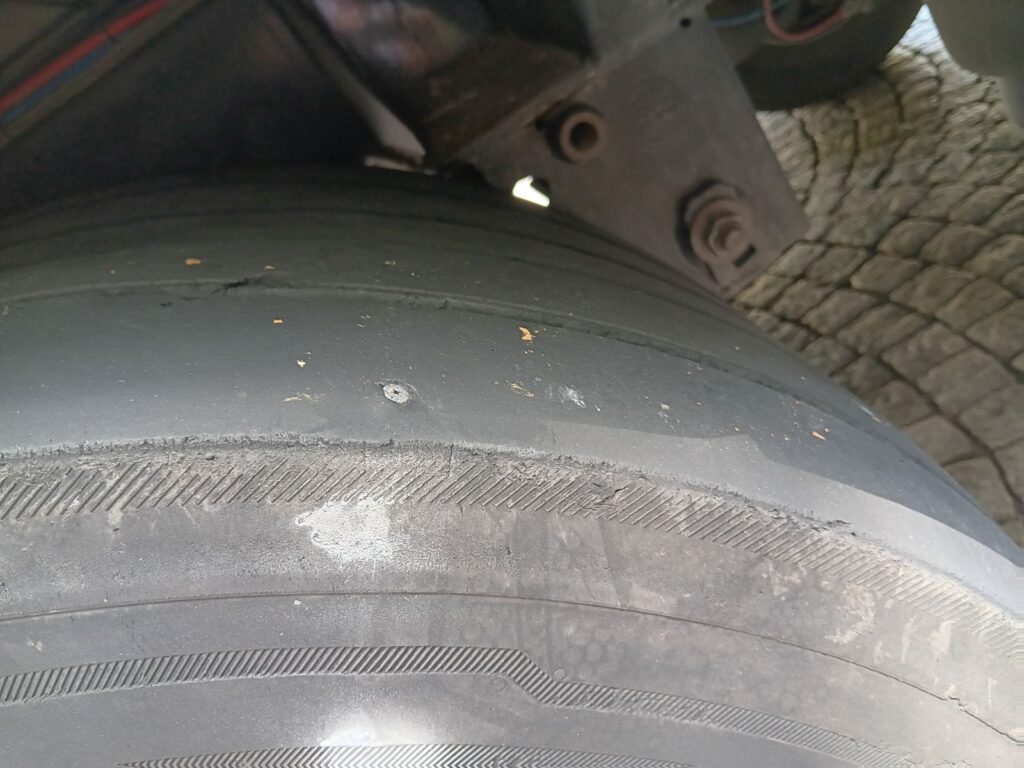
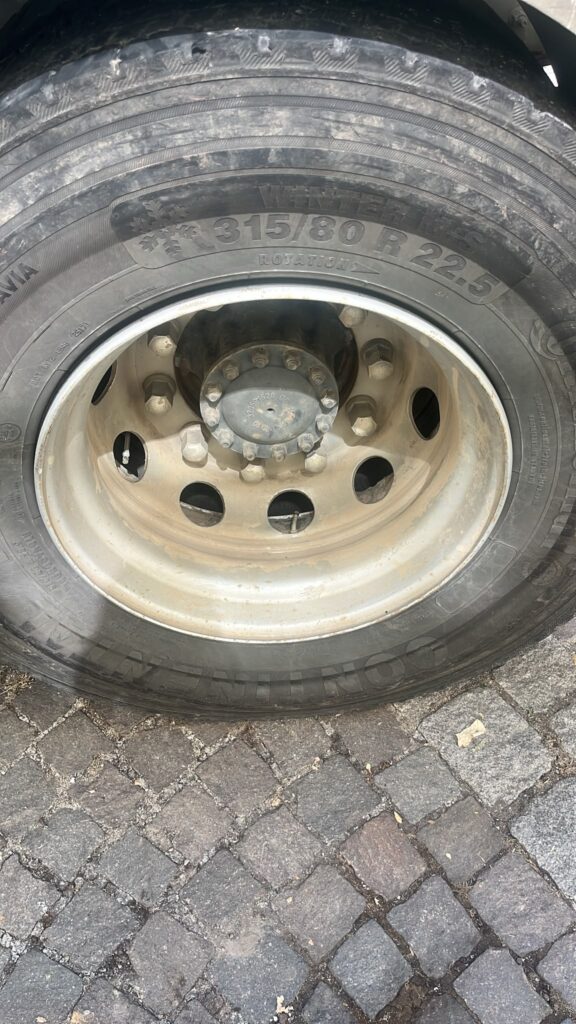
Although this call-out was a gearbox failure, fleet managers should keep the whole maintenance picture in view. Tyres from established manufacturers such as Michelin, Continental, or Goodyear work particularly hard on site vehicles, since grit, kerbs, and constant manoeuvring accelerate wear. Regular checks on tyre pressure and tread depth also lower the risk of knock-on drivetrain damage, since uneven tyre pressure transfers extra load spikes onto axles and the gearbox.
For gearbox and drivetrain questions, it’s also worth looking at component manufacturers such as ZF, whose systems are fitted on many mixer chassis — regular service intervals here aren’t optional, given the double duty of propulsion and drum drive running through the same drivetrain.
Why Choose LKW Help 24
- Reachable 24/7, across Germany, including for special vehicles like concrete mixers and site plant.
- Vetted partner network with recovery equipment rated for heavy loads and unusual centre-of-gravity vehicles.
- Transparent pricing, fixed line items rather than hidden lump sums.
- Multilingual dispatch, valuable for international fleets and site crews.
- Experience with special cases: not just tractor units and trailers, but mixers, cranes, and construction plant too.
Frequently Asked Questions
How much time is there before concrete in a stalled mixer’s drum sets?
It depends on the concrete grade, temperature, and any admixtures, so there’s no single figure. In summer temperatures, the available window is significantly shorter than in winter — when in doubt, count in hours, not days.
What does it cost to recover a concrete mixer with a gearbox failure?
In this case, the total came to €1,760 net, made up of the call-out, site security, the recovery itself using specialist equipment, and on-site time. The exact price depends on distance, terrain, and the recovery equipment required.
Why isn’t a concrete mixer taken straight to a workshop?
Because the site is usually urgently needed back, and choosing the right gearbox specialist takes time and coordination with the vehicle owner. A secured holding yard is the sensible interim step.
Why do gearboxes fail more often on concrete mixers than on standard tractor units?
Because mixers on site are constantly manoeuvring, pulling away from a standstill under full load, and the drivetrain also has to drive the drum — a considerably higher load than steady motorway driving.
What happens to the concrete while the vehicle is being recovered?
Where possible, remaining concrete is discharged or the drum is flushed before vehicle recovery begins. At a batching plant, this is usually straightforward to arrange.
Is recovering a concrete mixer legally the same as a standard tow?
Yes, the basic rules on towing and recovery are set out in Section 15a of the German road traffic regulations (StVO) — for special vehicles, additional operational arrangements with the site operator come into play as well.
Summary
- Vehicle type: concrete mixer on a heavy truck chassis
- Location: batching plant near Sindelfingen, Baden-Württemberg
- Cause: complete gearbox failure
- Response time: 12 minutes to dispatch, 55 minutes to arrival
- Total time: 2 hours 25 minutes from call to secure yard
- Cost: €1,760 net
- Destination: secure holding yard, not a workshop
Get Help Now
A concrete mixer with a gearbox failure on a construction site calls for experienced specialists, not improvisation. LKW Help 24 is available around the clock at +49 160 5753826 and at www.lkwhelp24.com — 24/7, across Germany. For a quick overview of our services: towing service, truck workshop, mobile service, or get in touch directly.
Keywords: concrete mixer gearbox failure | mixer truck recovery | concrete mixer breakdown assistance | site vehicle towing service | heavy recovery Baden-Württemberg | truck gearbox failure
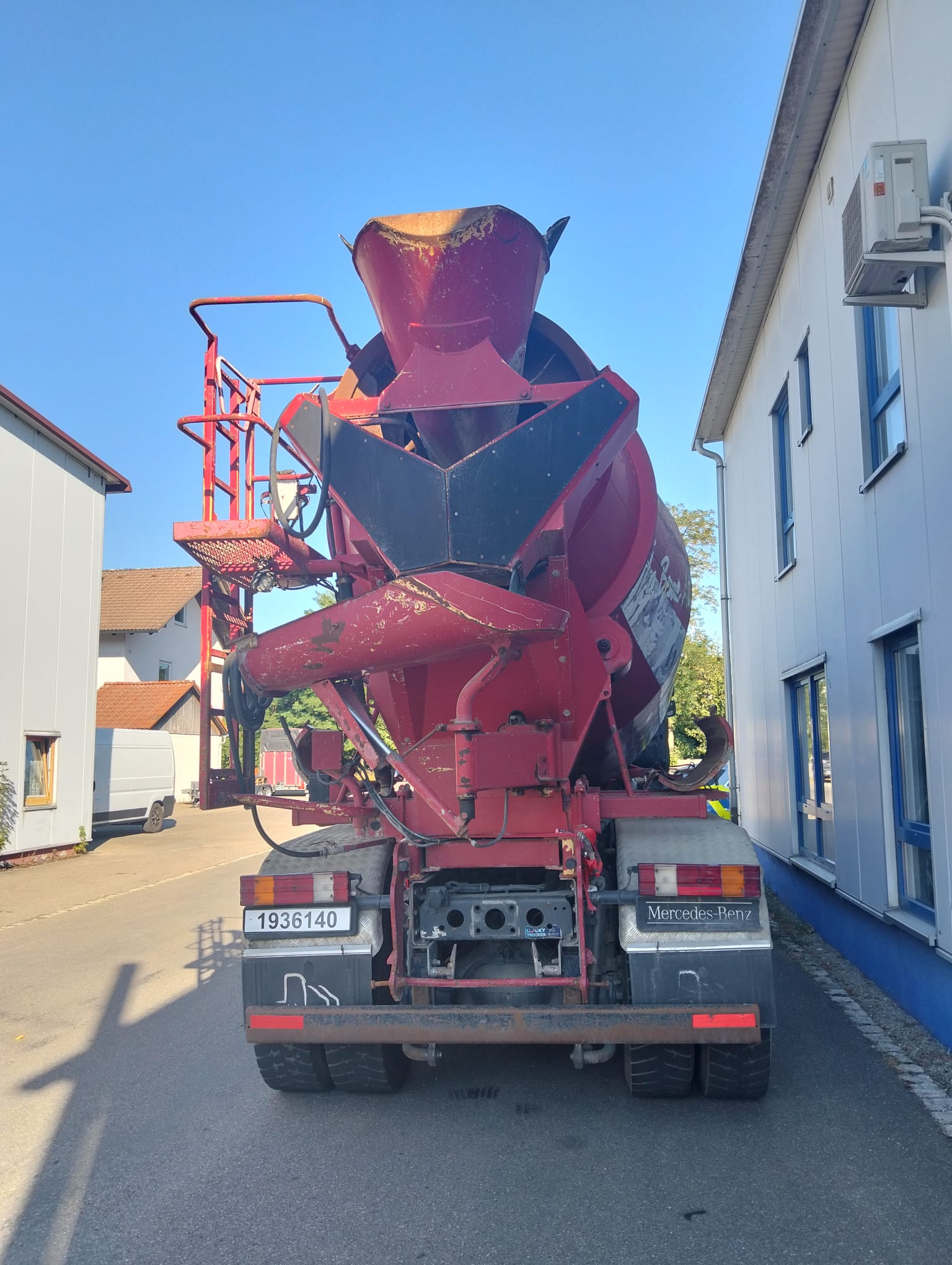
Related Articles
- Truck Recovery from Mud – Mercedes-Benz Actros Pulled from Waterlogged Ground
- Trucks Towing Service for Truck Gearbox Failure Frankfurt (Oder): Complete Breakdown Near Polish Border
- Towing Services: Truck Recovery in Winter
- Heavy Truck Recovery on the A8: Scania Car Transporter Near Stuttgart in 2 Hours 40 Minutes
- Trucks Towing Service: How We Rescued a 25t Scania from the Mud in 85 Minutes in Regensburg