Skip to content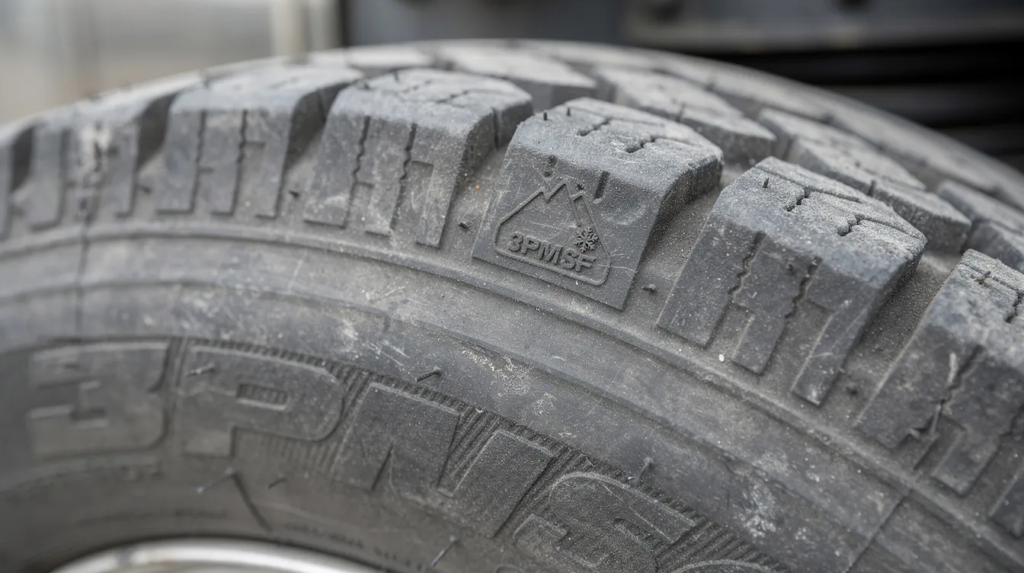
Introduction: Why Winter Tyres for HGVs Matter So Much
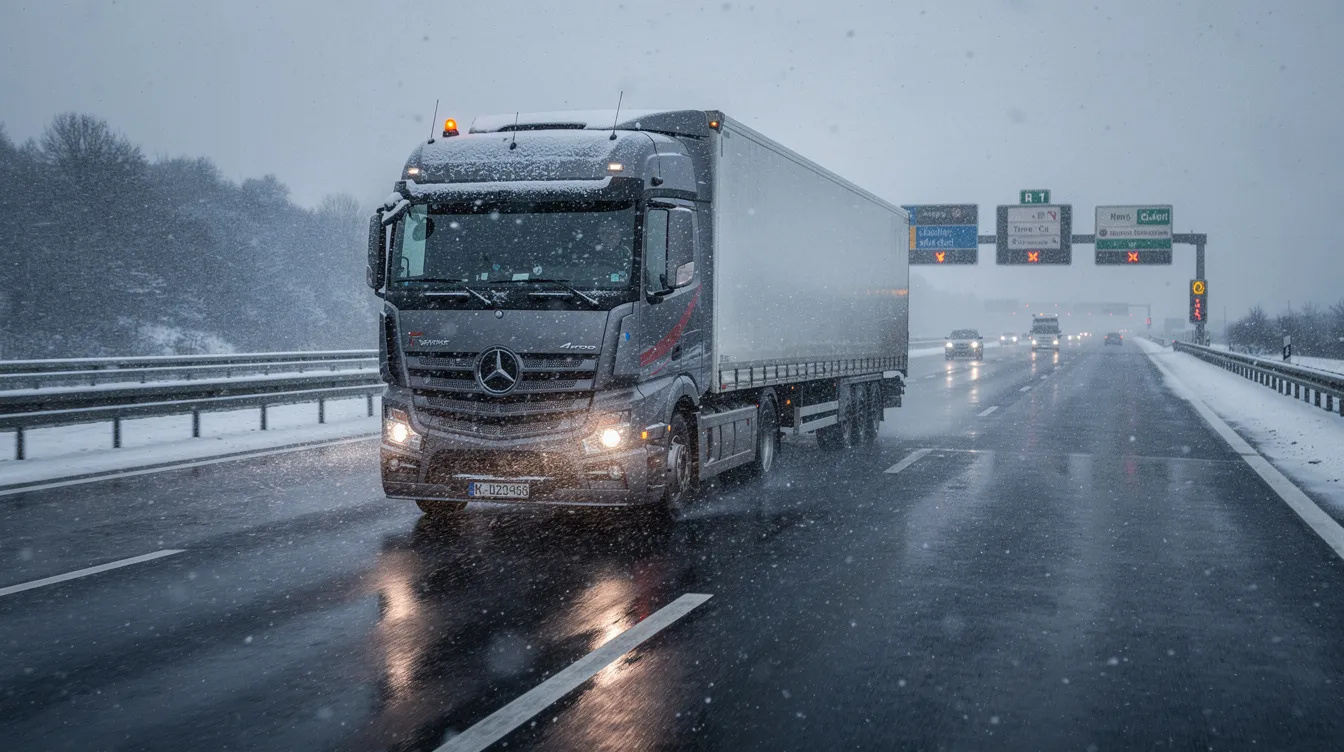
From November through March, Germany typically experiences winter conditions with snow, slush, freezing rain and temperatures regularly below 0 °C. For heavy goods vehicles with gross weights from 3.5 t up to 40 t and beyond, this creates a significantly elevated accident risk. On icy roads, braking distances increase substantially, and traction drops sharply — heavy vehicles skid more easily or become stranded on inclines.
Winter tyres were specifically developed to provide better grip, shorter braking distances and greater stability under wintry road conditions. Their special rubber compounds remain flexible even in cold temperatures below 7 °C, whereas summer tyres harden and lose traction. LKWHelp24, as a mobile HGV breakdown and tyre service operating throughout Germany, encounters winter-related tyre damage and breakdowns every single day — from frozen valves to trucks stuck in upland areas or Alpine foothills. That is precisely why LKWHelp24 offers a 24/7 mobile truck tyre service across Germany, This overview applies to the 2025/26 winter season and the rules in force during it.even in snow and ice.
Legal Winter Tyre Requirements for HGVs in Germany (Winterreifenpflicht)
The legal basis for the winter tyre requirement in Germany is § 2 Para. 3a of the Road Traffic Act (StVO). This provision establishes a situation-dependent obligation: when there is black ice, snow, slush, glazed frost or hoarfrost, vehicles must be fitted with appropriate tyres.
Important to understand: The winter tyre requirement does not apply from fixed calendar dates such as 1 November to 31 March. What matters are the actual road and weather conditions. This means HGV drivers and fleet managers must assess road conditions themselves.
For HGVs over 3.5 t gross vehicle weight, the following rules apply:
Requirement | Details |
|---|---|
Tyre marking | M+S (produced before 2018) or 3PMSF (Three Peak Mountain Snowflake) |
3PMSF obligation | Since 01.01.2018 for newly produced tyres on steering and drive axles |
M+S transition period | Ended on 30.09.2024 — pure M+S tyres without 3PMSF are no longer sufficient |
Affected axles | At minimum drive axles; since 01.07.2020 also front steering axles |
In practice, many haulage companies fit winter tyres beyond the legal minimum — including steering axles and sometimes trailer axles with 3PMSF tyres. This substantially increases safety, particularly on Alpine routes or in difficult freight conditions. A professional truck tyre service 24/7 in Germany also helps keep tyre parameters such as load rating, tread depth and pressure under constant control.
Which axles require winter tyres on an HGV?
In Germany, HGVs over 3.5 t must be fitted with winter tyres on at least the permanent drive axles. Since 1 July 2020, this obligation also applies to the front steering axles to ensure steering stability and safe driving in winter conditions.
- Drive axles: 3PMSF tyres legally required
- Steering axles: 3PMSF tyres also required since July 2020
- Trailer/semi-trailer axles: Not legally mandatory in Germany, but strongly recommended in difficult regions
Many haulage companies fit 3PMSF tyres on all axles for safety reasons. Studies show up to 30–50% shorter braking distances and significantly better uphill starts with full winter tyres across all axles.
LKWHelp24 recommendation: For international operations and frequent Alpine routes to Austria, Switzerland or Italy, all axles should ideally be fitted with 3PMSF tyres or at least quality all-season tyres bearing the 3PMSF mark. Other European countries such as Belgium or Scandinavia sometimes impose stricter requirements.

Minimum Tread Depth for HGV Winter Tyres
Tread depth is critical for traction on snow and for braking distances in wintry conditions. The sipes in the tread clear snow and provide grip — the less tread remaining, the worse the performance.
Category | Tread depth | Note |
|---|---|---|
Legal minimum (StVZO § 36) | 1.6 mm | Applies to all tyres, including winter tyres |
Expert recommendation | 4 mm | Winter performance drops sharply below this level |
Internal fleet standards | 4–5 mm | Many haulage companies set higher thresholds |
Ideal value for maximum safety | 6–8 mm | Especially recommended for drive axles |
How drivers can check tread depth regularly:
- Use a tread depth gauge: A cost-effective tool for precise measurements
- Check TWI markings: The Tread Wear Indicator shows the wear limit
- App-based scanners: Modern solutions for quick checks
- Before every longer journey: Carry out a full walk-round check of the tyres
Checks by the police and the Federal Office for Goods Transport (BAG) take place routinely, especially at border crossings and on main arterial routes. For foreign drivers in Germany: tread depth is an important inspection point at every check.
Fines and Consequences for Violating the Winter Tyre Requirement
Violations of the winter tyre requirement in Germany are not only penalised with fines — they can also lead to the vehicle being immobilised and cause significant delivery delays.
Violation | Fine | Additional consequences |
|---|---|---|
Driving without winter tyres in icy conditions | €60 | 1 point in Flensburg |
With traffic obstruction (e.g. becoming stranded) | €80 | 1 point in Flensburg |
With endangerment of other road users | €100 | 1 point in Flensburg |
Vehicle owner/company | €75 | For ordering or permitting use without adequate tyres |
- Vehicle immobilisation: Until the deficiency is corrected, sometimes for several days
- Delivery delays: Contractual penalties can amount to €10,000
- Insurance implications: In the event of an accident, gross negligence may be assumed; liability insurers may seek recourse or reduce cover by 50–100%
From our experience at LKWHelp24 and our specialised truck tyre service in Germany 24/7, many winter breakdowns are avoidable. In the 2023/24 season we attended thousands of breakdowns where inadequate tyres were the cause. The knock-on costs from traffic jams, contractual penalties and downtime can quickly reach €5,000 per day — many times the investment in quality HGV winter tyres.
Tips for Choosing the Right Winter Tyres for HGVs
Choosing the right winter tyres depends largely on the usage profile. An HGV operating in long-haul traffic between Germany and Belgium has different requirements from vehicles on Alpine routes or in Scandinavian conditions, and a comprehensive truck service in Germany 24/7 helps adapt maintenance and repairs to these profiles.
- 3PMSF symbol is mandatory: From the 2024/2025 season onwards, use exclusively winter or all-season tyres with the 3PMSF mark
- Consider operating area: Long-haul needs balanced treads; Alpine routes need aggressive snow treads; Scandinavian conditions need extremely cold-flexible compounds
- Observe axle assignment: Choose specific tyres for steering, drive and trailer axles
Axle | Typical size | Characteristics |
|---|---|---|
Steering axle | 385/65 R22.5 | Precise steering, even wear |
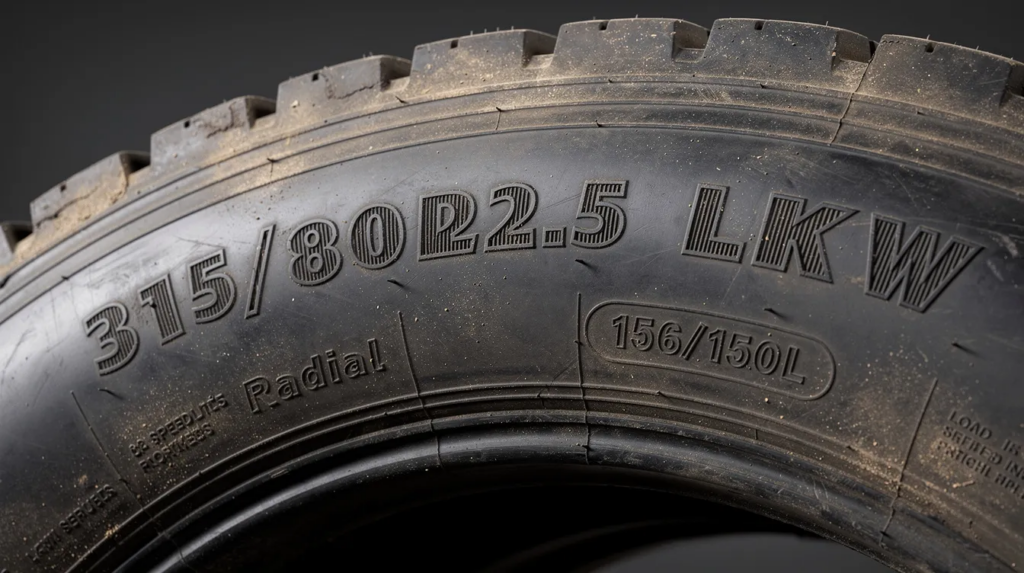
Drive axle | 315/80 R22.5 | Maximum grip, high traction |
Trailer axle | 385/65 R22.5 | Long-lasting, good mileage |
For the safety-critical drive axles, we recommend premium tyres from established manufacturers such as Michelin (X Multi Way), Continental (H-Space), Goodyear (KMAX), Bridgestone (M759) or Hankook (Winter I*Zen). Tests show 20–30% better mileage and performance compared with budget tyres.
Retreaded winter tyres: These can be up to 50% cheaper, but should only come from certified manufacturers (ETRTO-tested) with 3PMSF approval. For safety-relevant axles, use tyres retreaded at most once — mileage is approximately 10–20% lower than new tyres.

Practical notes for fleet operators and dispatchers
- Switch to winter tyres by mid-October at the latest
- Switch back to summer tyres no earlier than after Easter
- Adjust flexibly depending on current weather conditions across the country
Winter package for Alpine and upland routes: 3PMSF tyres on all axles, snow chains (permitted where signed, studded tyres prohibited except in North Friesland), shovel, grit, ice scraper, spare valves and pressure gauge.
Documentation field | Content |
|---|---|
Tyre type | Brand, model, axle assignment |
DOT number | Production date (max. 6 years for winter tyres recommended) |
Tread depth | Current reading; measure at least every 10,000 km or 3 months |
Change dates | Date of fitting/removal |
Around 40% of winter breakdowns are caused by incorrect or inadequate tyres. LKWHelp24 also provides advisory support for fleets as part of the mobile tyre service — for example with recommendations based on frequent breakdown causes. Our extensive truck breakdown service 24/7 in Germany underpins this across the country.
Practice: Checking, Maintenance and Typical Problems with HGV Winter Tyres
Even the best winter tyre only works properly when it is correctly mounted, maintained and regularly checked. A consistent maintenance routine is therefore indispensable for safety in road traffic.
- Check flanks and tread surface for damage
- Identify foreign objects such as screws or nails
- Check for visible ageing cracks (critically examine tyres older than 6 years)
- Identify uneven wear patterns
Problem | Cause | Solution |
|---|---|---|
Frozen valves | Condensation, sub-zero temperatures | Apply warm water carefully |
Rim corrosion | Road salt, moisture | Regular cleaning, protective lacquer |
Uneven wear | Chain use (max. 100 km) | Wheel alignment, rotation |
Pressure loss | Temperature fluctuations, small punctures | Daily check, repair |
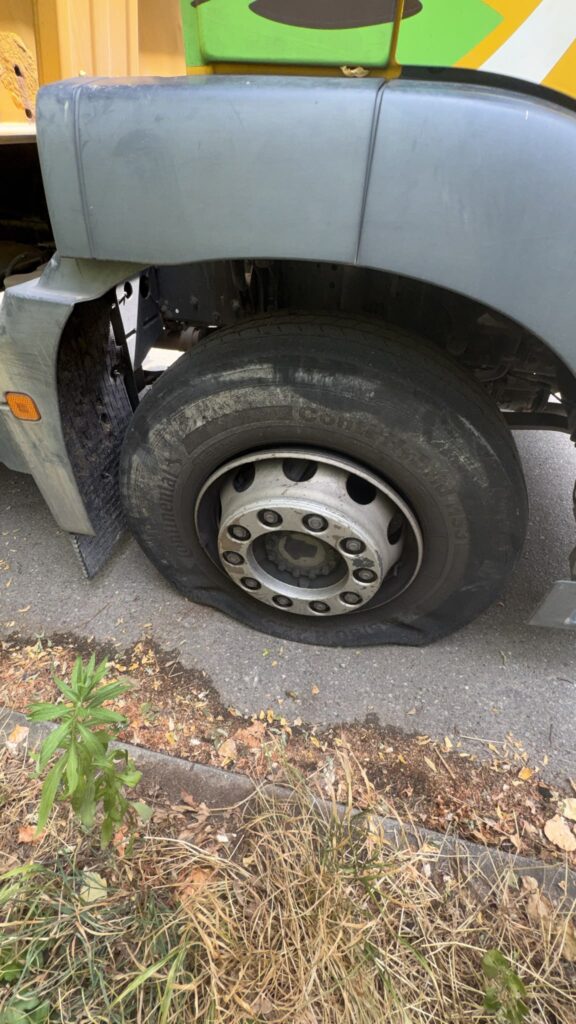
In the event of a breakdown, LKWHelp24 can change defective tyres directly on the motorway, A-road or at a customer terminal and supply replacement tyres of various brands — even at night and at weekends in rain, snow or ice. If the vehicle is no longer mobile, a specialised truck towing service in Germany 24/7 ensures safe recovery.
Special notes for foreign drivers in Germany
Important for international HGV drivers (plain language): In Germany, trucks need winter tyres when there is snow, ice or frost. The tyres must carry the 3PMSF symbol. They must be fitted to drive and steering axles. Without the correct tyres: fine of €60–100 and 1 point.
Police checks take place frequently on German motorways, notably on the A3, A5, A7, A9 and A61. At border crossings, vehicles from other EU states and third countries are also fully inspected. Officers check tyre type, 3PMSF marking and tread depth.
LKWHelp24 provides multilingual support: Our team can assist in English and partly in Polish and Romanian. Also available: serwis opon ciężarowych w Niemczech 24/7 for Polish-speaking drivers.

Who is liable: driver and operator duties for the 2025/26 season
The winter tyre duty under German traffic law is situational, and it applies to two parties at once: the driver who sets off in winter conditions, and the operator or haulage company that orders or allows the trip. For the 2025/26 season the rule stays the same, with no fixed calendar dates – what matters is black ice, snow, slush or frost on the actual route.
What the driver must check before departure
Drivers must assess road and weather conditions themselves before setting off, including whether the fitted tyres are adequate for the planned route. Anyone who drives in clearly wintry conditions without 3PMSF-marked tyres on the steering and drive axles is personally in breach of the rule, regardless of who gave the order.
- Check tyre marking on all mandatory axles (3PMSF symbol; plain M+S has not been sufficient since 30 September 2024)
- Check tread depth on steering and drive axles (legal minimum 1.6 mm)
- Assess weather and route before departure, especially through low mountain ranges or Alpine regions
What the operator and haulage company are responsible for
The vehicle keeper or haulage company is liable when a trip is ordered or tolerated in winter conditions despite tyres that do not meet requirements. In practice, a dispatcher who sends a truck out on unchecked winter tyres carries a separate fine risk on top of the driver’s own risk.
Checklist: documents and tyres before the trip
- Check the sidewall for the 3PMSF symbol on steering and drive axles
- Measure tread depth with a gauge and note the result
- Visually inspect for damage, cracks and foreign objects
- Keep vehicle documents and proof of the last tyre check to hand
- If in doubt, contact a mobile tyre service before departure, not only once a breakdown happens
What police and freight authorities check at roadside stops
At roadside checks, police and the Federal Office for Goods Transport (BAG) mainly look at tyre marking, tread depth and overall tyre condition. The fine amounts mentioned earlier are indicative figures from the fine catalogue and can change; what stays reliable is the actual legal situation at the time of the check. For drivers and dispatchers, it pays to check once too often rather than risk a vehicle ban and delivery delay.
Winter Tyres for Trucks – All Yearly Overviews
This article is part of our yearly series on winter tyres for trucks in Germany:
- Winter Tyres for HGVs 2025: Legal Duties, Fines and Checks in Germany (this article)
- Truck Winter Tyres 2026: Tyre Choice, Axles and Practice in Germany
- Winter Tyres for Trucks 2027: Rules, Safety and Breakdown Help
LKWHelp24 – Your Mobile Winter Tyre and Breakdown Service for HGVs Across Germany
LKWHelp24 is your specialised mobile breakdown and tyre service exclusively for HGVs, articulated lorries, buses and commercial vehicles throughout Germany. Our team understands the special requirements of professional road haulage and the urgency with which problems must be solved. We work closely with our mobile truck service in Germany 24/7 to provide particularly fast help even regionally.
- Availability: 24 hours a day, 7 days a week, 365 days a year
- Also at weekends, bank holidays, at night and in heavy snowfall
- Network: Partners and service vehicles nationwide for rapid assistance
- Deployment locations: Motorways, A-roads, service areas, logistics hubs, customer terminals
LKWHelp24 not only fixes tyre punctures, but also advises on the selection and fitting of suitable HGV winter tyres. We can source matching tyres from various brands and fit them on site — so you are back on the road as quickly as possible.
With the right winter tyres and a strong partner like LKWHelp24 on your side, HGV drivers and fleets can stay safe and mobile throughout the German winter. Do not wait until the first breakdown occurs — contact us for advice or in an emergency. We are here for you, whenever and wherever you need us. 📞 +49 160 5753826