Skip to content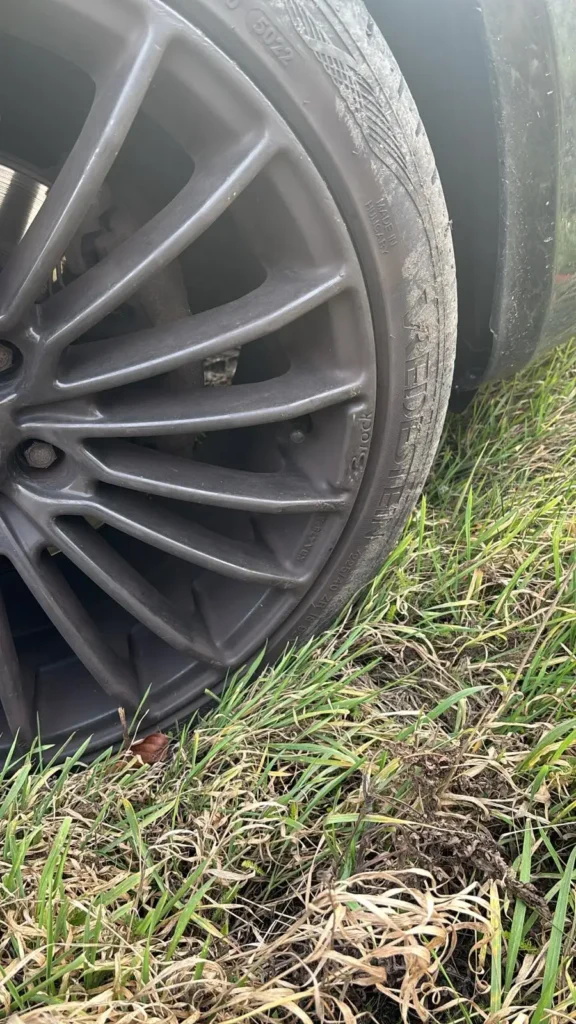
Motorway tyre blowouts rarely give any warning. One moment the ride feels normal, the next the car is pulling hard to one side and the driver is fighting to keep it straight while traffic thunders past at 130 km/h. On the A3 near Cologne, in the direction of Frankfurt, that is exactly what happened to a driver of a black, sportily specced compact car riding on aftermarket Brock alloy wheels. A sidewall blowout on one of the rear tyres turned a routine drive into a genuine roadside emergency, and it is a scenario LKWHelp24 deals with around the clock, every day of the year, anywhere in Germany.
This is not a rare, freak occurrence. Low-profile summer tyres under high motorway speeds and heavy load are particularly vulnerable to sidewall damage, and when that sidewall lets go, there is no slow leak to warn you. It happens instantly. What follows in this case study is a transparent look at exactly what LKWHelp24 and its regional partner network did, how long it took, what it cost, and why calling a professional roadside team beats trying to sort it out yourself on a motorway hard shoulder.
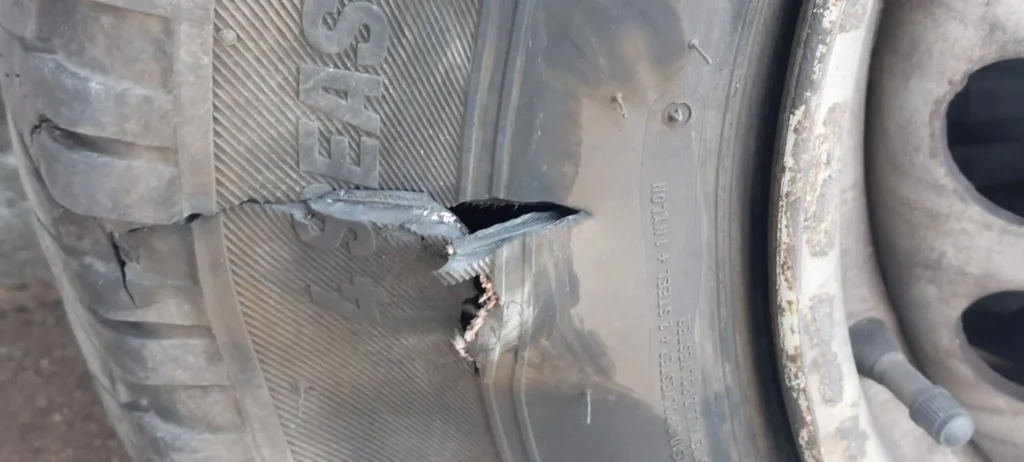
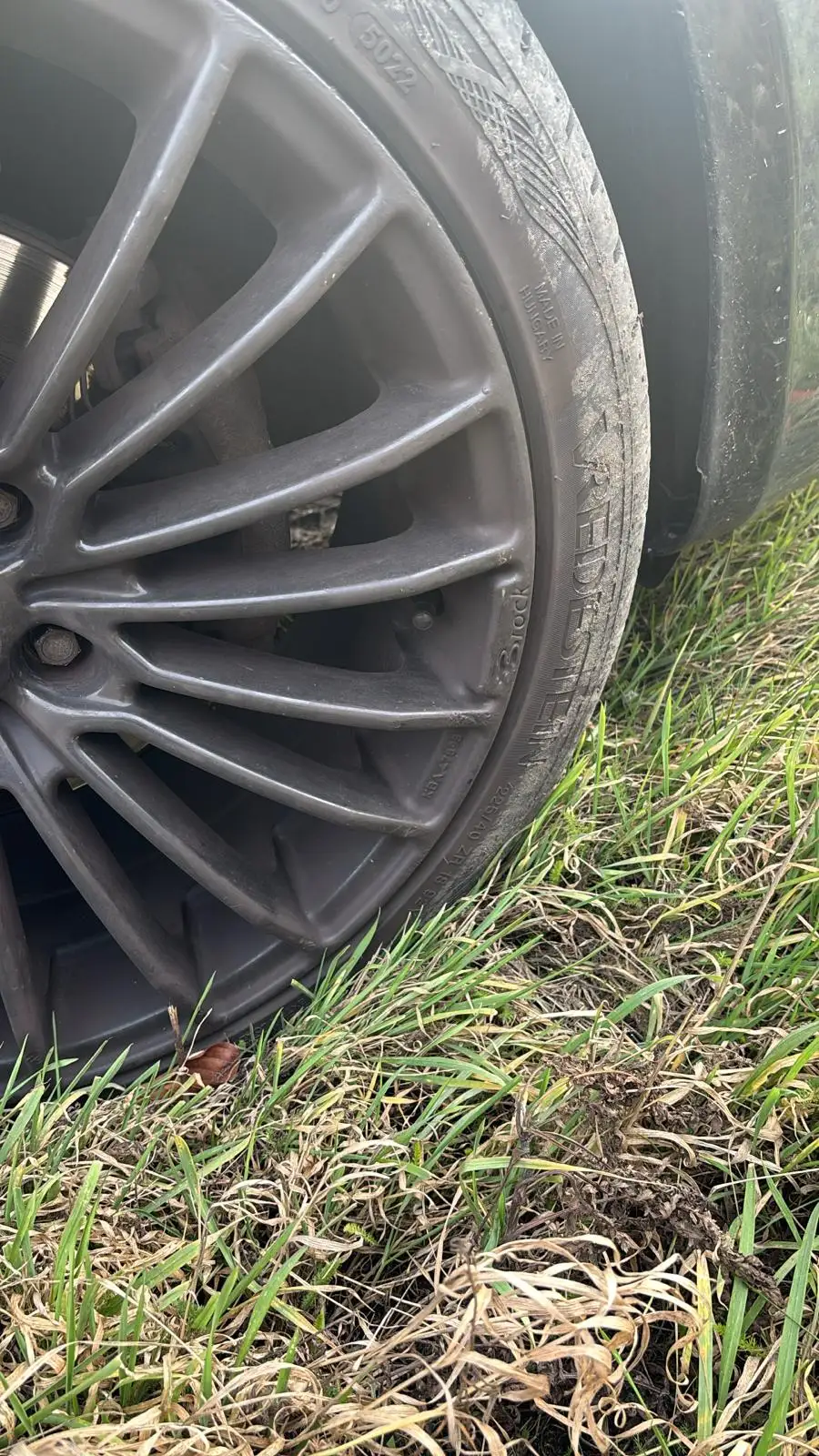
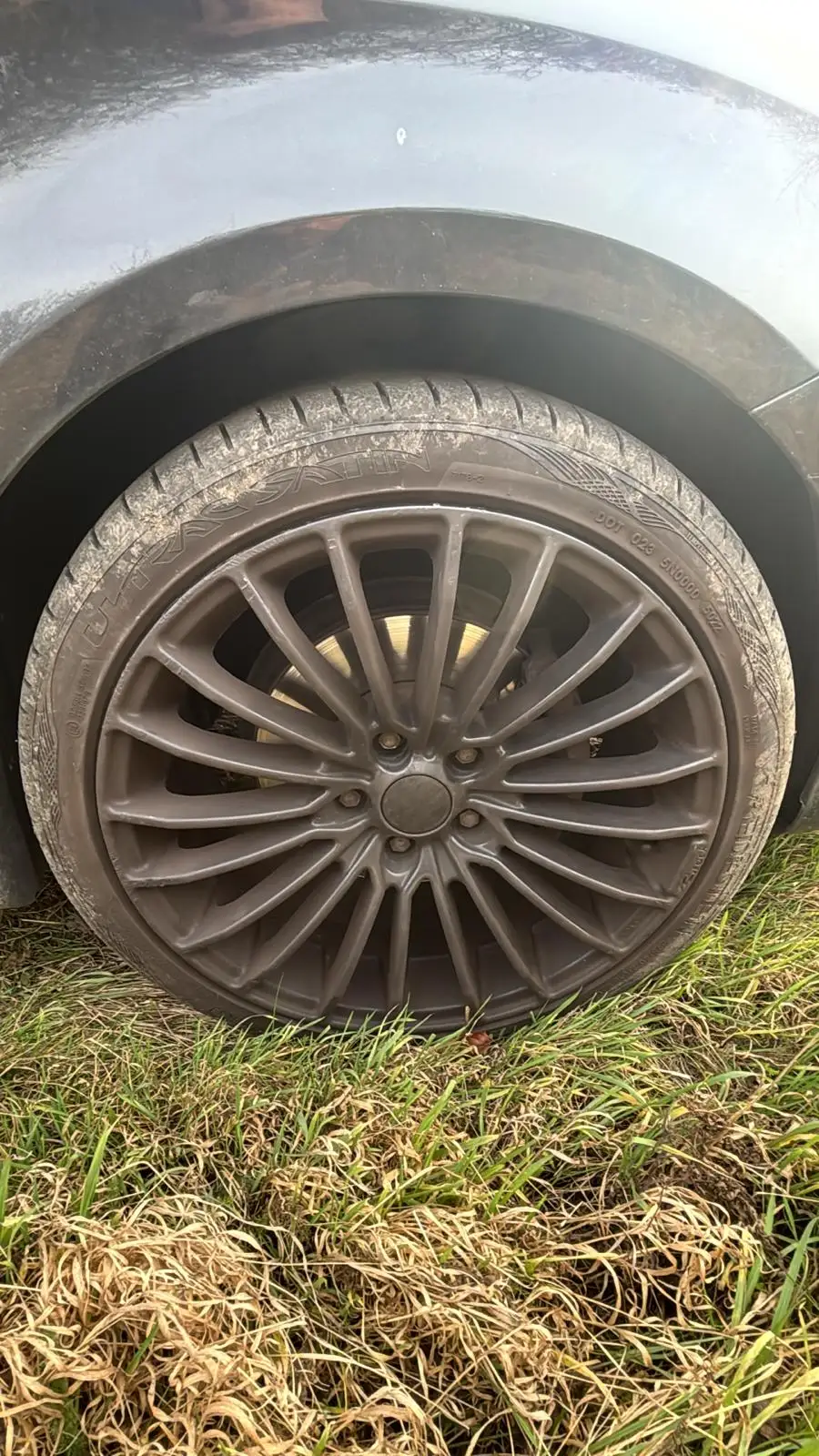
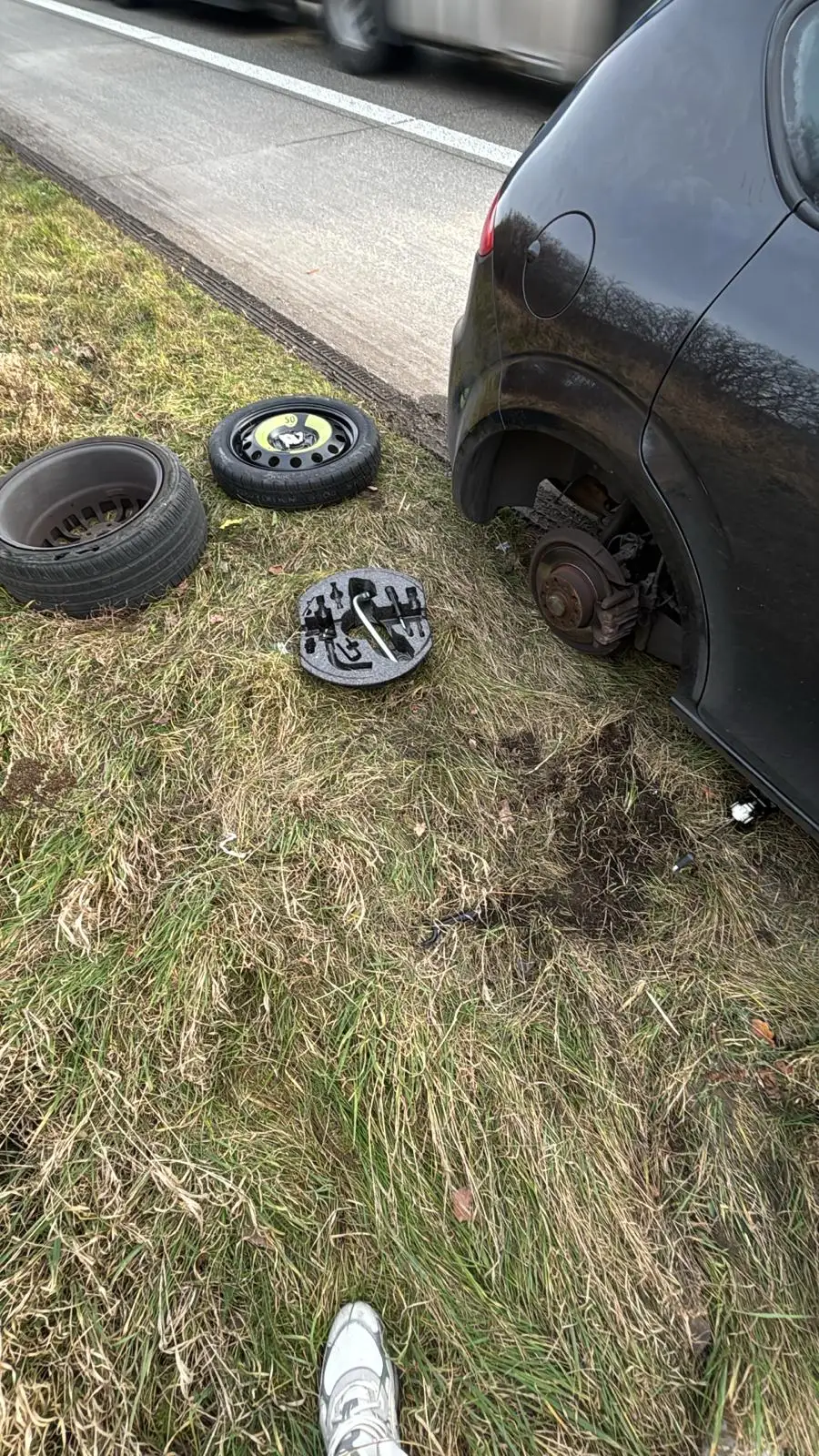
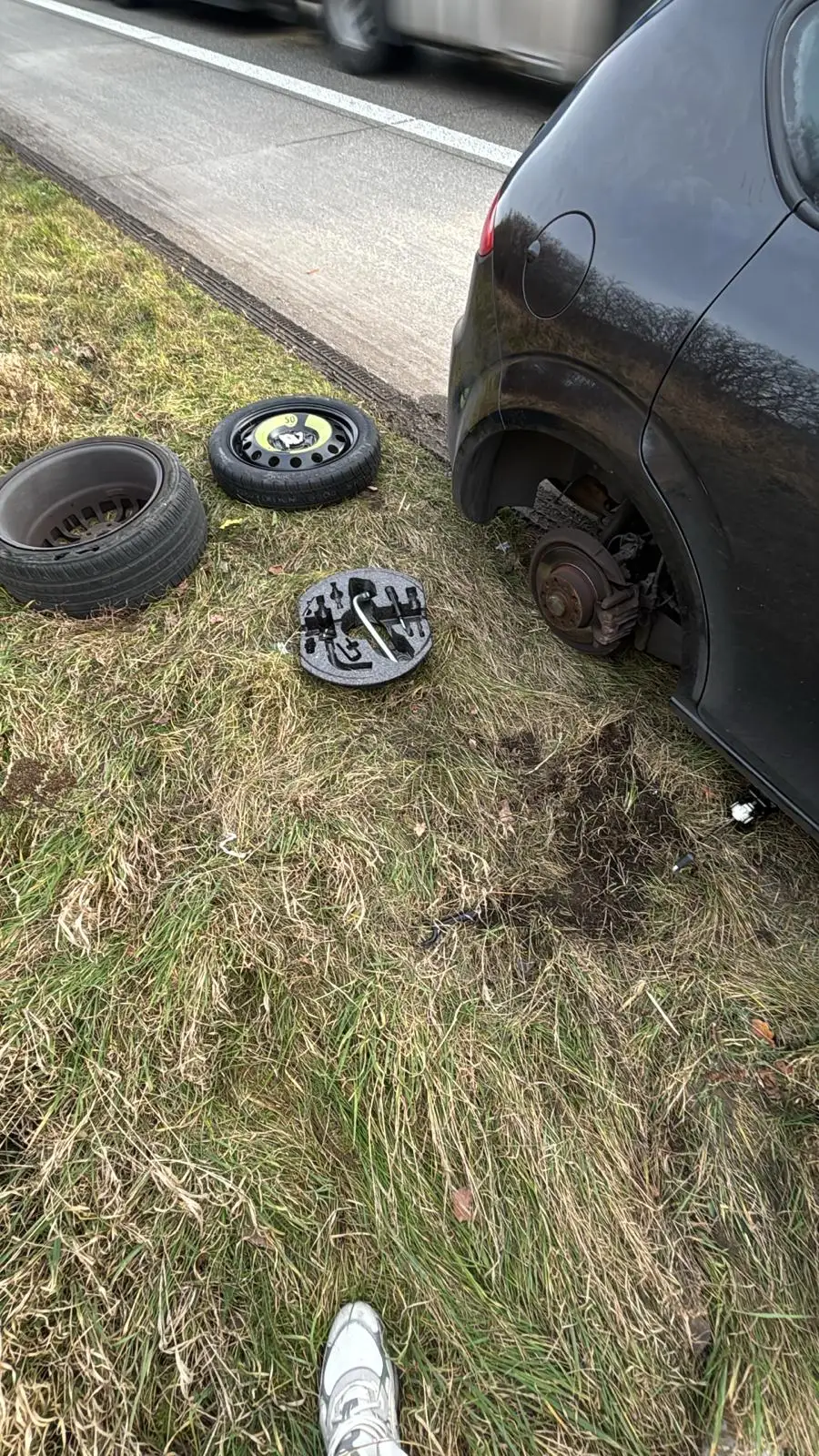
Bildunterschrift: „Pkw-Reifenpanne auf der A3 bei Köln – geplatzter 225/40 ZR18 und montiertes Notrad.”
The Emergency
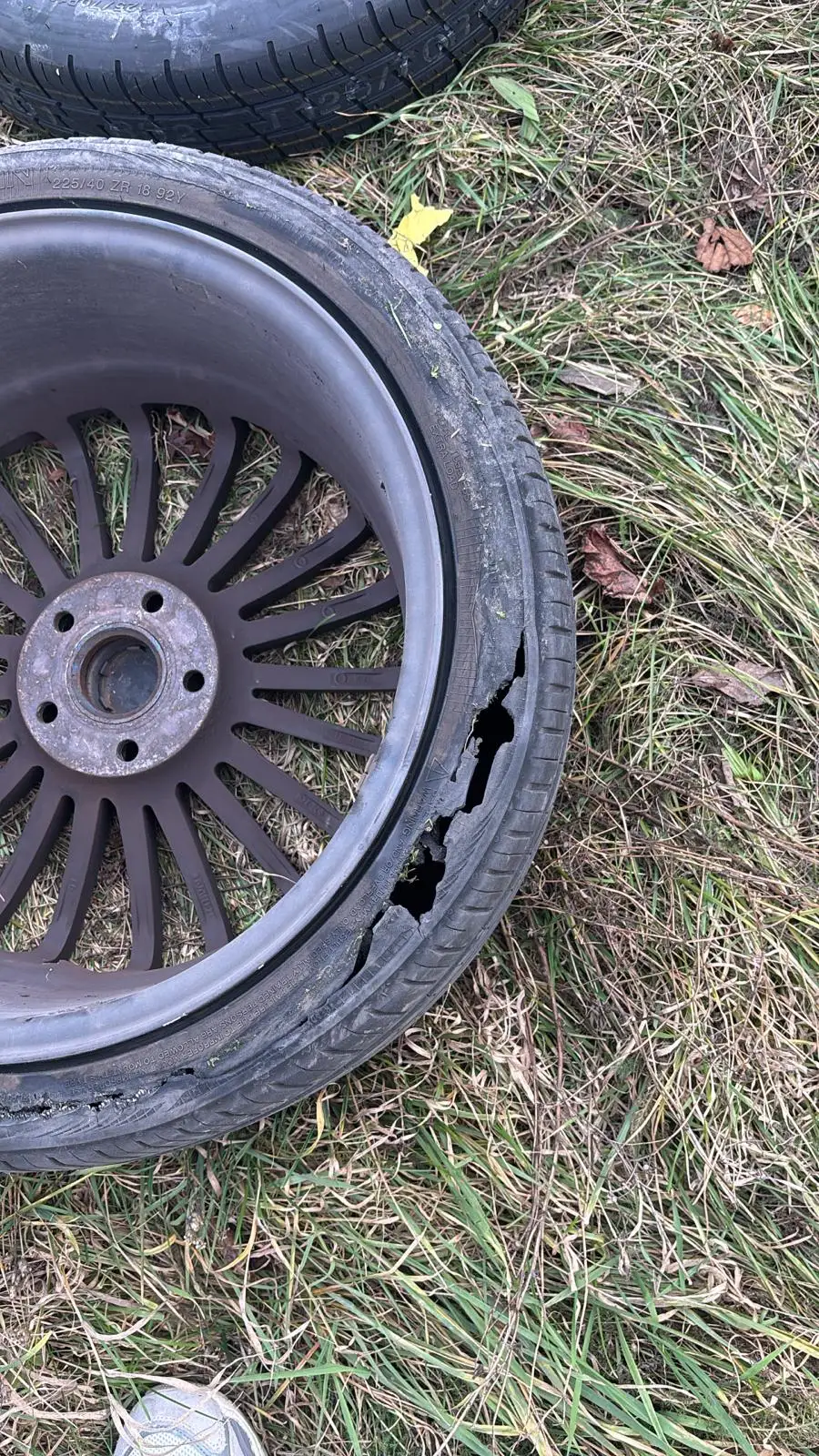
The driver was travelling on the A3 near Cologne, heading towards Frankfurt, when the rear nearside tyre suffered a sidewall blowout. The tyre in question was a 225/40 ZR18 92Y — a low-profile summer tyre typical of sportier compact cars — and the sidewall had opened up completely. This is a different animal to a simple puncture. A punctured tread can sometimes be nursed along at low speed; a blown sidewall cannot. The tyre was no longer roadworthy in any sense, and continuing to drive on it risked damaging the alloy wheel, the suspension, or worse, losing control entirely.
The car itself sat on aftermarket Brock alloy wheels, which meant there was an added concern once the wheel came off: had the rim taken any damage from running, however briefly, on a collapsed tyre? That question would need answering on site before anyone could think about getting the car moving again.
With the vehicle stranded and clearly unsafe to continue, the driver did the right thing and called for professional roadside assistance rather than attempting a DIY tyre change on the hard shoulder of a busy motorway.
How Help Was Organised
LKWHelp24 operates a nationwide network of vetted regional partners, which means that wherever a breakdown happens in Germany, there is very likely a qualified technician close by. For this case, dispatch worked as follows:
● The driver called LKWHelp24’s 24/7 emergency line and described the location and the nature of the damage.
● The call handler identified the nearest available regional partner covering the Cologne area and dispatched them immediately.
● An estimated time of arrival was communicated back to the driver so they knew what to expect and could stay calm and safe while waiting.
● The partner technician was briefed on the tyre size, the wheel type, and the fact this was a sidewall failure rather than a slow puncture, so they arrived with the right kit already loaded.
● Throughout, LKWHelp24 stayed in contact to confirm the technician was en route and to relay any updates.
This is the core value of a professional dispatch network: rather than a driver frantically searching for a local garage or a generic breakdown number and hoping for the best, one call connects them to a coordinated system that already knows who is nearby, what they carry, and how quickly they can respond.
The Situation On-Site
When the regional partner arrived at 10:48, the priority was safety first. A car stopped on the hard shoulder of the A3 is in a genuinely dangerous position — traffic passes at full motorway speed just metres away, and every minute spent working roadside carries risk. The technician’s first task was securing the scene: warning triangle out, hazard lights on, high-visibility clothing worn, and the vehicle positioned as far onto the shoulder as possible before any work began.
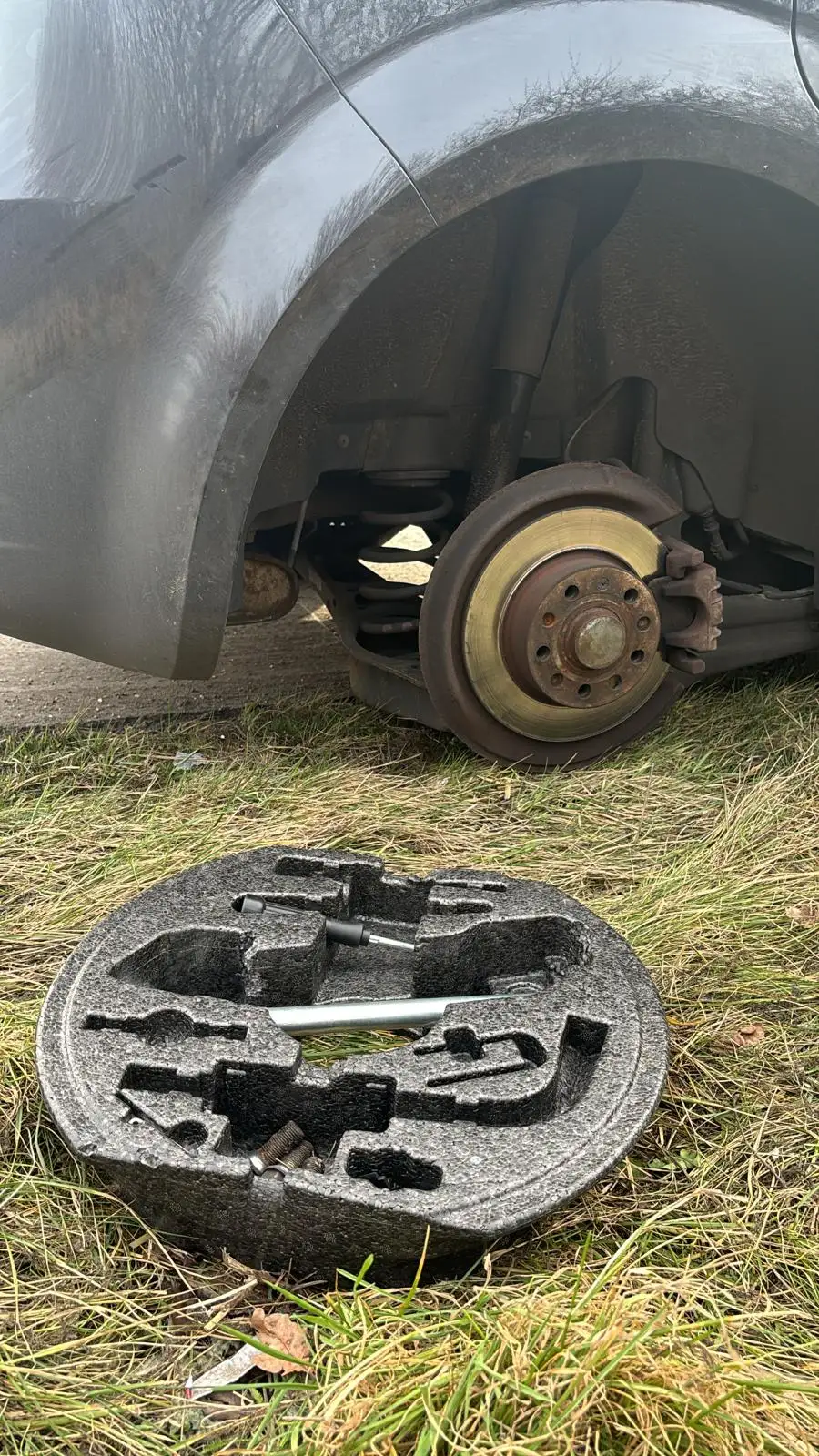
Once secured, the car was jacked up and the destroyed wheel was inspected properly. This is where the aftermarket Brock alloy became relevant. Unlike a factory steel wheel, an aftermarket alloy running on a collapsed tyre, even briefly, can suffer rim damage — a bent lip, a hairline crack, or scoring on the bead seat that would prevent a new tyre from sealing correctly. The technician checked the rim thoroughly and confirmed it was intact, with no damage to report. The axle was also checked and found to be fine — no secondary damage from the blowout, which is by no means guaranteed in these situations and is one of the main reasons a full on-site inspection matters.
With the rim confirmed sound, the destroyed tyre was removed. Because Cologne is a large city with plenty of tyre suppliers, but not every one of them stocks a specific low-profile 225/40 R18 summer tyre in a 92Y load and speed rating on the spot, the pragmatic and safe solution was to fit the vehicle’s compact space-saver spare — often called a Notrad or Faltrad in German workshops — for the short journey to a proper tyre fitting bay. A space-saver spare is not designed for sustained motorway speeds; it is rated for a maximum of 80 km/h and is intended purely to get a vehicle safely to a repair point, not as a long-term substitute.
Step-by-Step: What the Technician Did
Step 1 — Assess and secure. The technician confirmed the sidewall was completely blown, set up warning triangles, and positioned the vehicle safely before touching any tools.
Step 2 — Stabilise the vehicle. The car was jacked correctly using proper jacking points, wheel chocks were used, and the vehicle was made stable before the wheel was removed.
Step 3 — Remove the damaged wheel and inspect the rim. The destroyed tyre and wheel assembly were taken off, and the Brock alloy rim was inspected for cracks, bends or bead-seat damage. It passed inspection clean.
Step 4 — Fit the space-saver spare. The compact spare was mounted, the wheel nuts were torqued to the correct specification, and the tyre was inflated to 4.2 bar, the pressure specified for space-saver spares (notably higher than a standard road tyre, which typically sits around 2.2 bar on this class of vehicle).
Step 5 — Final check and documentation. The technician double-checked torque, confirmed the space-saver was seated correctly, and briefed the driver on the 80 km/h speed limit that applies to space-saver spares, along with the reminder that this is a temporary fix, not a permanent one.
Full Timeline
| Time | Phase | Action |
|---|---|---|
| 10:12 | Call | Driver phones LKWHelp24’s 24/7 emergency line |
| 10:20 | Dispatch | Regional partner assigned, ETA sent to driver |
| 10:48 | Arrival | Service vehicle reaches the scene on the A3 |
| 10:55 | Securing | Vehicle stabilised, wheel jacked up |
| 11:08 | Removal | Destroyed wheel removed, rim inspected and confirmed intact |
| 11:20 | Fitting | Space-saver spare mounted, torque checked, inflated to 4.2 bar |
| 11:28 | Completion | Final inspection and documentation, vehicle roadworthy again |
Total time from call to roadworthy: around 1 hour 16 minutes. Time actually spent on site: roughly 40 minutes.
Cost
| Item | Price (EUR) |
|---|---|
| Motorway callout / roadside assistance, 24/7 | 120 |
| Wheel change and space-saver fitting on site | 60 |
| Disposal of the damaged tyre | 10 |
| TOTAL | 190 |
Worth noting: this figure covers getting the driver safely mobile again with a temporary spare. A full replacement tyre in the correct 225/40 R18 size — for example a Continental PremiumContact — would add roughly a further 140 EUR when fitted properly at a tyre centre, bringing the complete job, start to finish, to around 330 EUR.
A handful of factors influence the final price on any roadside callout: the time of day and whether it falls outside normal working hours, the distance the partner has to travel, motorway access restrictions, and whether the tyre size in question is common stock or needs sourcing specially. Compare that 190 EUR against the alternative of a driver attempting a wheel change alone on a live motorway hard shoulder — aside from the very real safety risk, an amateur attempt with the wrong torque sequence or an incorrectly seated space-saver can cause far more expensive damage further down the line, not to mention the fines and points that come with an unsafe roadside repair in Germany.
Why a Professional Service Is Essential
Changing a wheel on the hard shoulder of a motorway such as the A3 is genuinely dangerous, and it is worth spelling out why doing it yourself is a poor idea even for a confident amateur mechanic:
- Traffic passes within touching distance at full speed, and roadside fatalities during DIY tyre changes are a documented and recurring cause of motorway incidents in Germany.
- Without a proper jack and stable ground, a vehicle can slip while jacked, causing serious injury.
- Space-saver spares have specific torque and pressure requirements; getting them wrong can cause the wheel to work loose at speed.
- A rim damaged by a blown tyre is not always visible to an untrained eye, and driving on a compromised rim can lead to a second, more dangerous failure.
- German traffic law expects a broken-down vehicle to be secured properly with a warning triangle and hazard lights; an inexperienced driver working roadside without the right high-visibility gear or positioning is putting themselves and others at risk.
- A professional technician carries the correct tools and diagnostic knowledge to spot secondary damage — such as axle or suspension issues — that a driver would likely miss entirely.
Typical Breakdown Situations We Handle
LKWHelp24’s partner network is built primarily around heavy goods vehicles, but as this case shows, the same rapid-response infrastructure covers car breakdowns too, right across Germany’s motorway network. Situations our partners regularly attend include:
- Sidewall blowouts and tread separations on cars, vans and lorries
- Slow punctures that leave a vehicle unsafe to continue
- Wheel changes on the hard shoulder of the A3, A1, A4, A40 and every other German autobahn
- Sourcing and fitting replacement tyres in unusual or low-stock sizes
- Mobile tyre service where a vehicle cannot be safely moved
- Recovery and towing where a wheel change alone is not sufficient
- Support for fleet vehicles and company cars experiencing tyre failure far from base
Prevention Tips for Drivers and Fleets
Sidewall blowouts, in particular, often have an identifiable cause, and a few simple habits go a long way towards avoiding them:
- Check tyre pressure at least monthly, and always before a long motorway journey — underinflated tyres flex more and run hotter, which is a major contributor to sidewall failure.
- Inspect sidewalls visually for cracking, bulging or kerb damage; a bulge in particular is a warning sign that should never be ignored.
- Respect load limits. An overloaded car or van puts extra stress on tyres that were never rated for the additional weight.
- Replace tyres based on age as well as tread depth — rubber degrades even when tread looks fine, and low-profile performance tyres in particular are more sensitive to age-related sidewall weakness.
- After hitting a pothole or kerb hard, have the tyre and wheel checked even if there is no visible damage; sidewall structures can be compromised internally without an obvious external sign.
- Keep the space-saver spare, if fitted, correctly inflated and in good condition — a flat or perished spare is no use in an emergency.
Fleet Maintenance and Tyre Options
For fleet operators, a single roadside tyre failure is rarely just a one-off cost. It means a vehicle off the road, a driver delayed, and potentially a knock-on effect on delivery schedules or client appointments. Building a relationship with a rapid-response partner like LKWHelp24 means that when a tyre does fail — and eventually one will — the downtime is measured in an hour rather than an afternoon.
When it comes to selecting a replacement tyre after an emergency like this one, brand and specification both matter. For a 225/40 R18 fitment, established manufacturers such as Continental, Michelin and Goodyear all produce premium options engineered specifically for low-profile applications, where sidewall strength and heat dissipation at speed are critical. A Continental PremiumContact, for example, is designed with reinforced sidewall construction that offers better resistance to exactly the kind of impact damage that caused this blowout. Fleets running performance or low-profile tyres as standard should factor in slightly shorter replacement intervals and more frequent visual sidewall inspections compared with standard-profile tyres, given their reduced margin for error.
LKWHelp24: Your Roadside Emergency Partner
LKWHelp24 was built around heavy goods vehicle recovery, but the same principles apply whether the vehicle stranded on the hard shoulder is a 40-tonne artic or a compact hatchback with a blown rear tyre. What sets the service apart:
- Genuinely 24/7 availability, every day of the year, across all of Germany
- A nationwide network of certified, vetted regional partners rather than a single overstretched team
- Transparent pricing agreed and communicated before work begins, with no surprise charges
- Multilingual dispatch and support, essential on Germany’s international motorway network
- Fast average response times thanks to regional coverage rather than a single central depot
- Full documentation of every job, useful for insurance purposes and fleet record-keeping
Summary
- Tyre size: 225/40 ZR18 92Y, low-profile summer tyre
- Location: A3 near Cologne, hard shoulder, direction Frankfurt
- Response time (call to arrival): 36 minutes
- Total time (call to roadworthy): approximately 1 hour 16 minutes
- On-site working time: roughly 40 minutes
- Total cost: 190 EUR (plus approx. 140 EUR for a full replacement tyre, fitted separately)
- Secondary damage: none — rim and axle both checked and confirmed sound
Request Emergency Assistance Now
If you are stranded with a blown tyre, a puncture, or any other roadside emergency anywhere in Germany, LKWHelp24 is one call away.
Call +49 160 5753826 or visit www.lkwhelp24.com
Available 24/7 across all of Germany.
Keywords: roadside assistance | tyre blowout Germany | pannenhilfe | towing service | mobile tyre service | breakdown recovery A3 Cologne | abschleppdienst | truck tyre service near me | motorway wheel change | 24/7 roadside assistance Germany | reifenmontage kosten | tow truck near me
You might also be interested in
- Mobile Truck Tyre Service: A2 Hannover Sprinter Blowout
- Mobile Truck Tyre Service on the Autobahn: Actros 2543
- Mobile Truck Tyre Service: Autobahn Düsseldorf Wheel Change
- Truck Tyre Blowout on the Steering Axle: Roadside Service
For general information on tyre safety and roadside assistance, the ADAC guide to tyres and breakdown help is a useful reference, and for details on replacement tyre specifications, see Continental’s passenger car tyre range.