Skip to content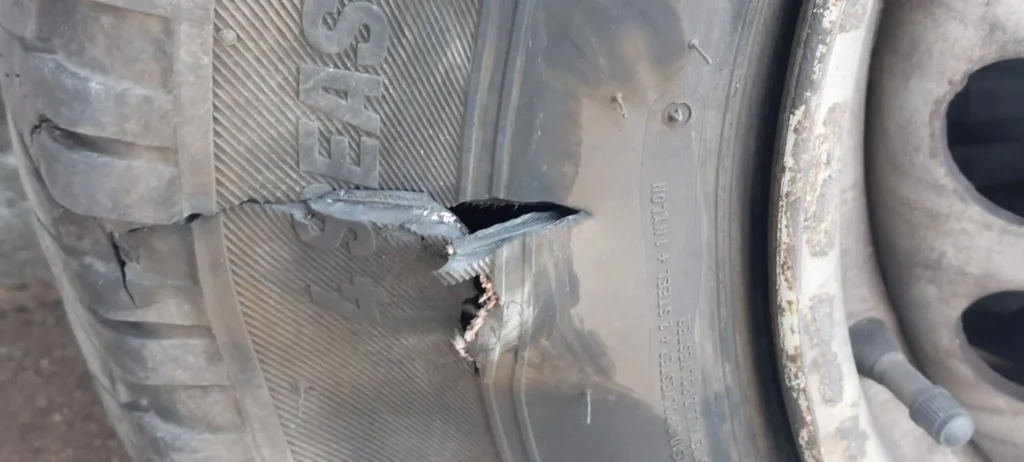
Introduction
A rear tyre blowout on a loaded 3.5-tonne van, sitting on the hard shoulder of the A2 with lorries thundering past at 100 km/h, is not a minor inconvenience. It is one of the most dangerous situations a delivery driver can face on a German motorway. The margin for error is thin: too close to live traffic, no proper warning distance, and a driver under pressure to get parcels to their destination on time.
This is the story of a courier van, a shredded 235/65 R16C commercial tyre and a call to LKWHelp24 that turned a potential write-off of the day into a 58-minute roadside repair. No towing, no overnight recovery, no missed deliveries beyond a couple of hours. Just a fast, correctly executed mobile tyre service that got a loaded Sprinter back on the road towards Berlin.
For fleet operators and owner-drivers running vans and light trucks across Germany, this case is a useful reference point: what a genuine 24/7 lorry breakdown service actually looks like in practice, what it costs, and why calling a professional roadside assistance provider beats trying to sort it out yourself on a live carriageway.
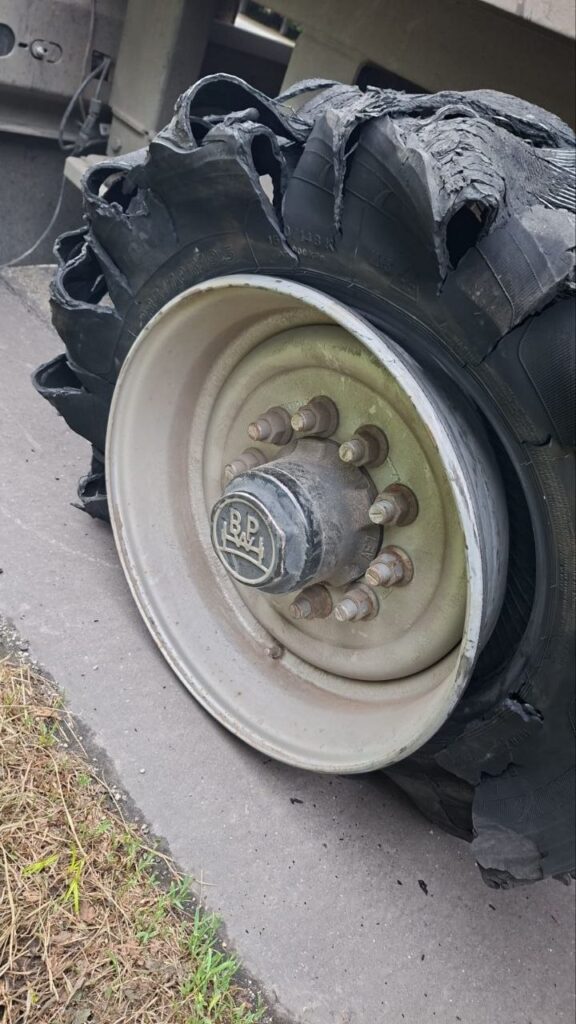
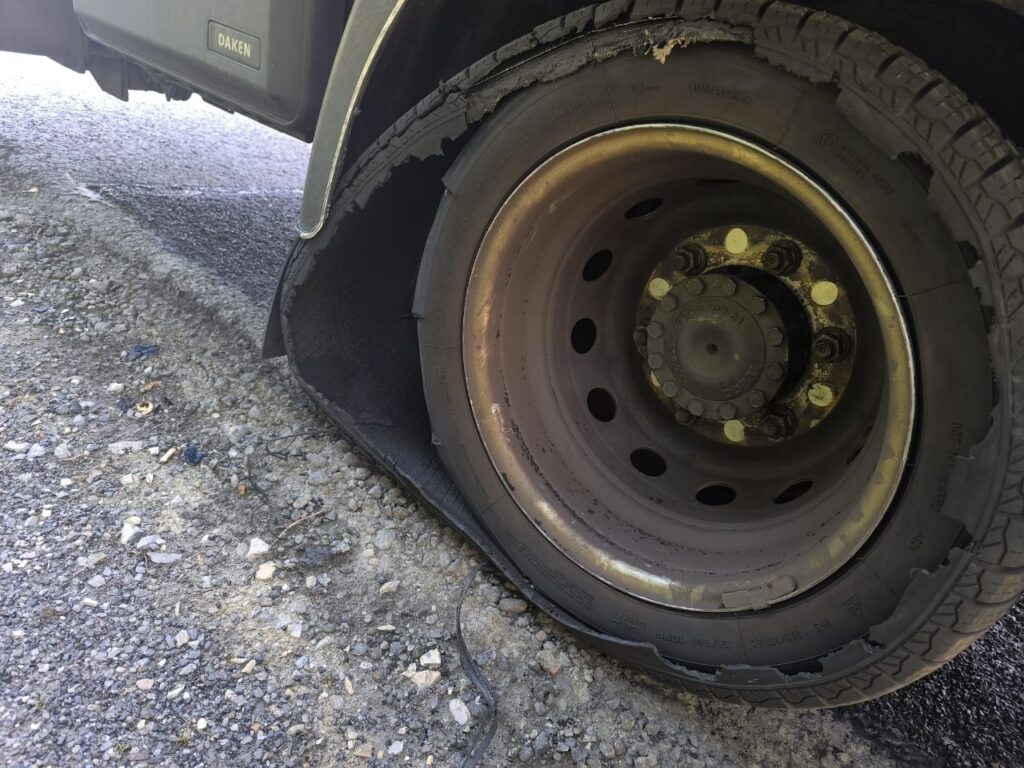
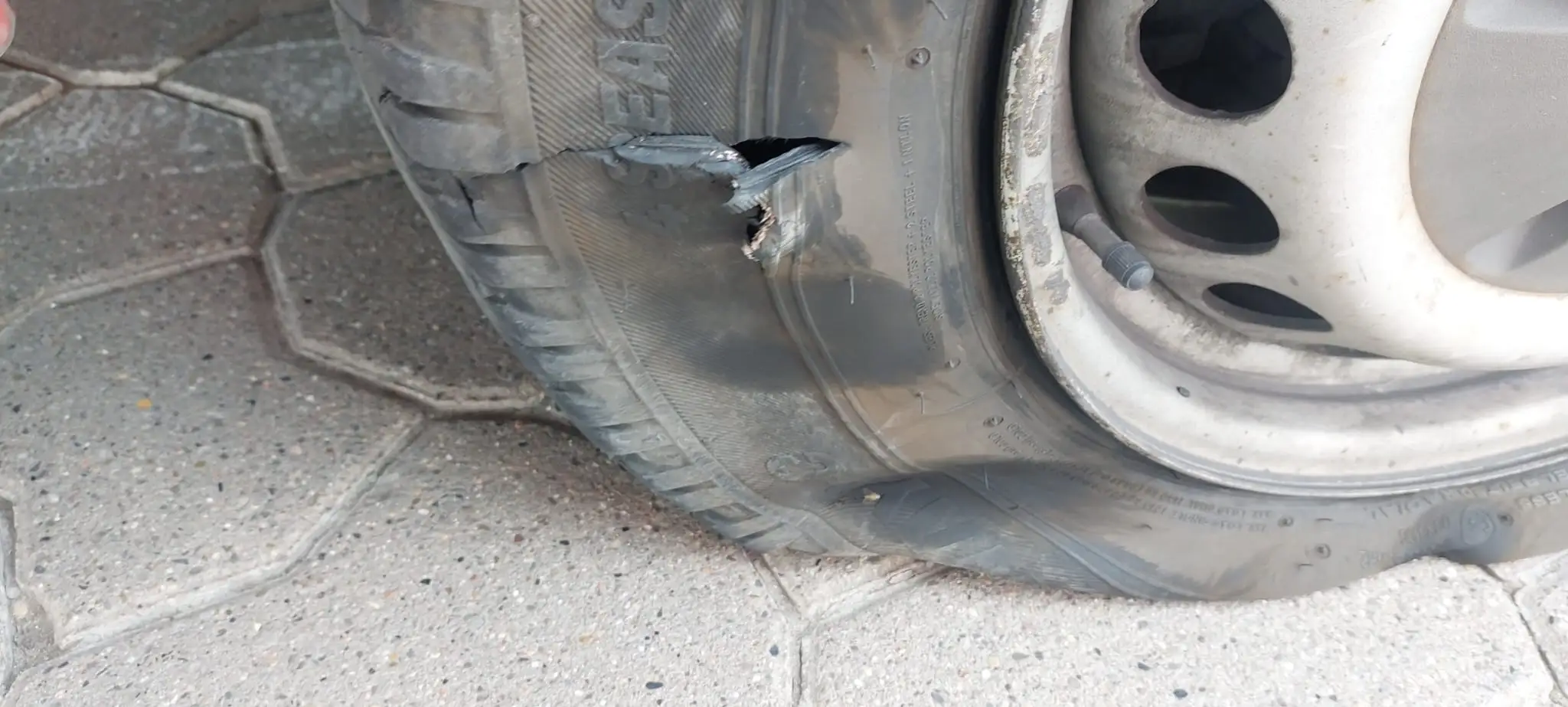
„Transporter-Reifenservice bei Reifenpanne auf der A2 bei Hannover – zerstörter 235/65 R16C nach Reifenplatzer.”
The Emergency
The driver was heading east on the A2, on the stretch near Hannover-Anderten and the Lehrte junction, bound for Berlin. The vehicle was a Mercedes-Benz Sprinter 316 CDI panel van, 3.5 tonnes gross vehicle weight, working a parcel delivery route with roughly 1.4 tonnes of freight on board. Loaded vans of this size put considerably more stress on their tyres than an empty one, and it showed.
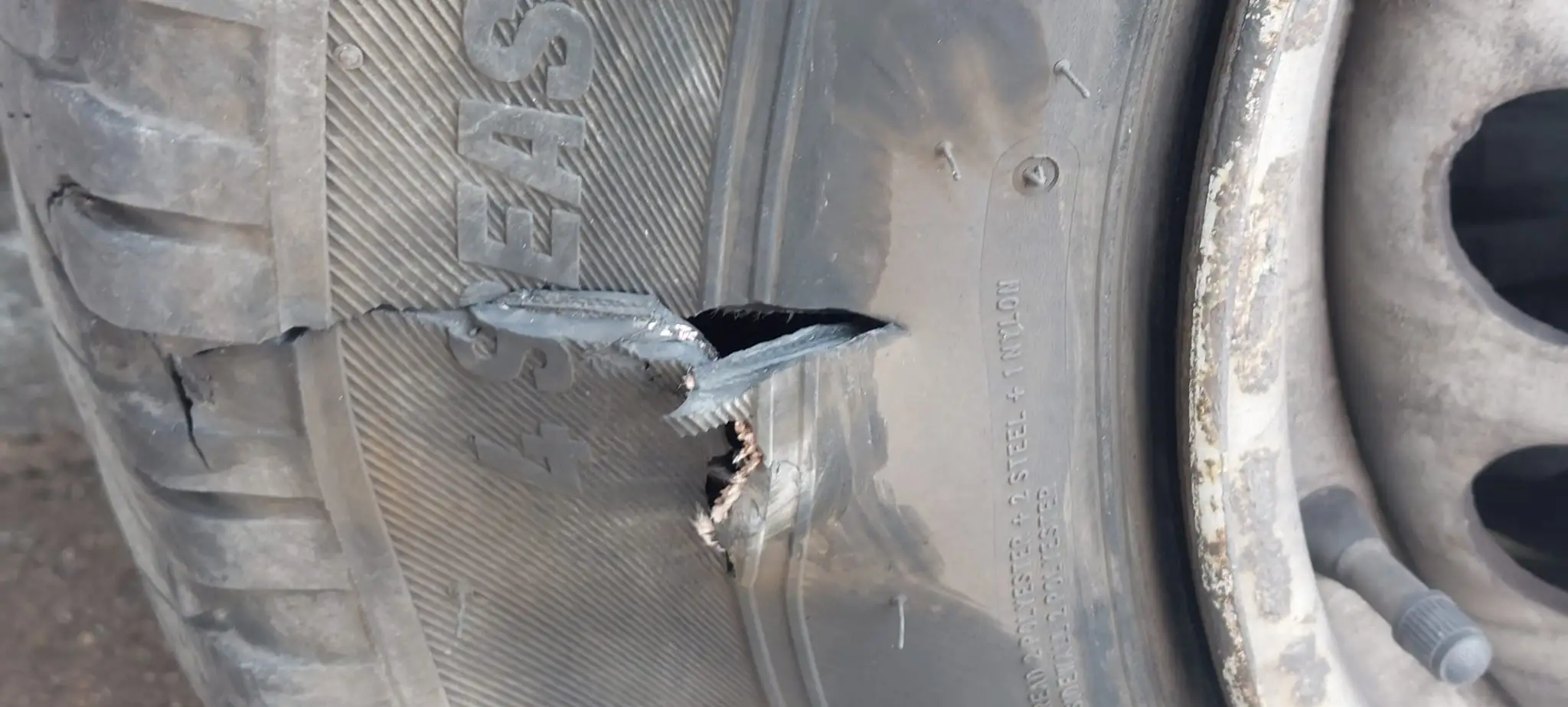
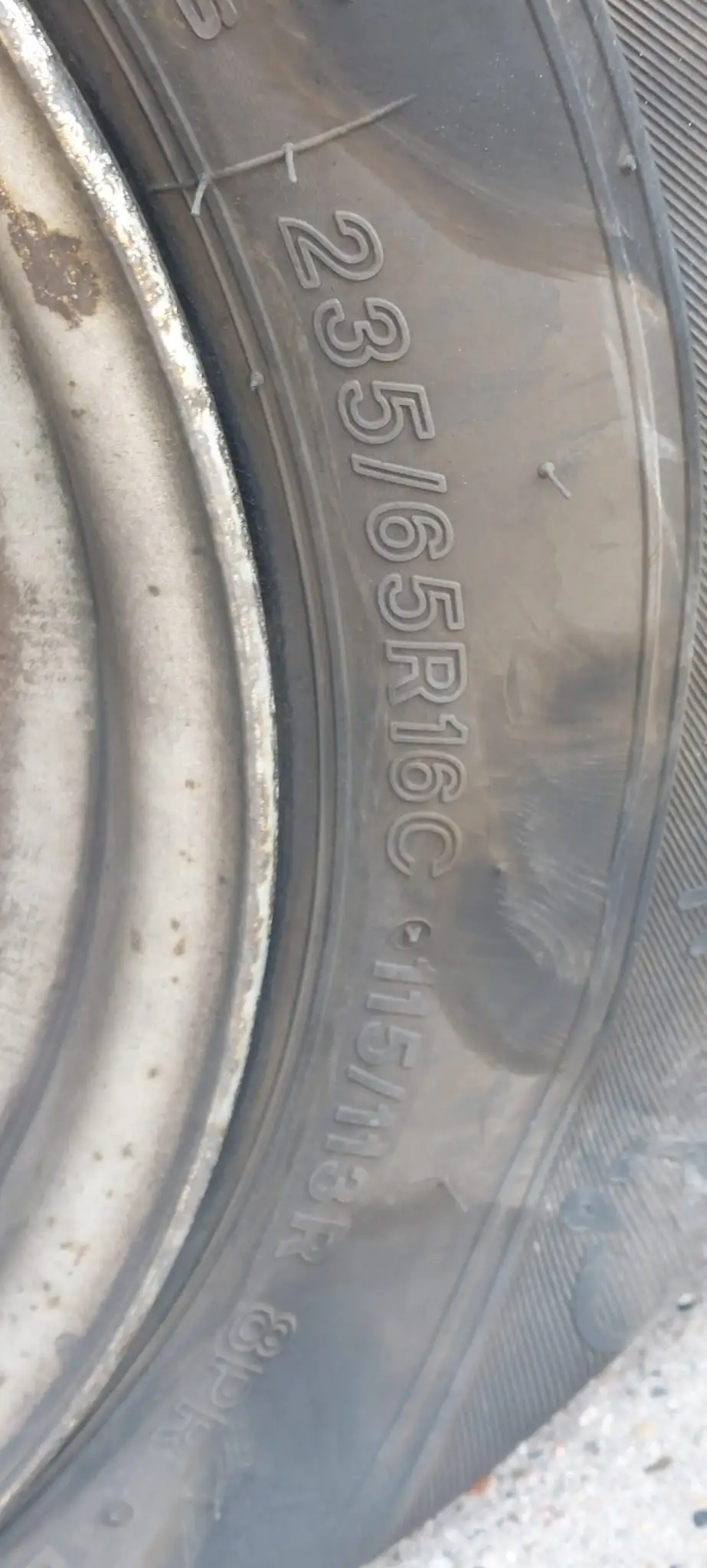
Without warning, the rear right tyre suffered a catastrophic sidewall blowout. This was not a slow puncture or a nail picked up in a yard. The sidewall itself ruptured under load, the tyre was completely destroyed, and the internal cords were exposed. On a commercial van tyre rated 235/65 R16C 115/113R, 8PR, that kind of failure usually means the sidewall has been overstressed, whether through age, kerb damage, underinflation or a structural weak point that finally gave way at speed.
The driver did the right thing immediately: pulled onto the hard shoulder as far from live traffic as the van would allow, put the hazards on, and called the LKWHelp24 emergency hotline rather than attempting to inspect or change the wheel himself on a motorway shoulder with no protection from passing HGVs.
How Help Was Organised
LKWHelp24 works through a network of vetted regional partners across Germany, which means a call rarely has to wait for a technician to drive across half the country. The dispatch process for this case ran as follows:
● 13:38 — driver calls the LKWHelp24 emergency hotline, reports location (A2 hard shoulder near Hannover, direction Berlin) and describes the blown rear tyre
● 13:50 — regional partner Mobilservice24, based in the Hannover area, is dispatched and an ETA is confirmed with the driver
● Dispatcher relays the tyre specification (235/65 R16C) to the partner so the correct replacement is loaded onto the service van before departure
● Driver is advised to stay behind the crash barrier, away from the vehicle, until the technician arrives
The whole point of a partner network structured this way is proximity. A Hannover-based team responding to a breakdown near Hannover-Anderten means minutes matter, not hours. That is the difference between “truck tyre service near me” actually meaning something and a national hotline routing a job to whoever happens to be free three states away.
The Situation On-Site
A blown sidewall on a loaded commercial van is more hazardous than most drivers assume. Van tyres in the 235/65 R16C 115/113R 8PR specification are designed to run at higher pressures than standard car tyres, typically in the region of 4.5 to 5.5 bar depending on load, precisely because they carry heavier, uneven cargo weights. When the sidewall fails at that pressure, the tyre doesn’t just go flat, it disintegrates, and the wheel can drop onto the rim edge within seconds, generating sparks and a distinctive burning-rubber smell that many drivers report afterwards.
There were two immediate priorities for Mobilservice24 on arrival at 14:22. First, secure the scene: a warning triangle and beacon to make the stationary van visible to approaching traffic on a motorway where vehicles are travelling at speed and the hard shoulder offers little real protection. Second, assess whether the failure had caused any secondary damage. A tyre that shreds at speed can throw debris that damages the wheel arch, brake lines or the rim itself. On this Sprinter, the steel rim came through undamaged and there was no axle damage, which meant a straightforward wheel change rather than a more involved repair or a tow to a workshop.
Step-by-Step
Step 1 — Scene security. At 14:30, warning triangle and beacon in place, the van was jacked and the wheel prepared for removal. With a loaded 3.5-tonne van, correct jacking points matter; get it wrong and you risk the jack slipping under load.
Step 2 — Removal of the destroyed tyre. By 14:48 the ruined 235/65 R16C had been stripped from the rim. The technician inspected the rim carefully at this stage, checking for distortion, cracking around the bead seat or heat damage from the tyre running briefly on the rim edge after the blowout. The rim was confirmed intact.
Step 3 — Fitting the replacement. A new Continental VanContact 200 in the correct 235/65 R16C 115/113R specification was fitted, balanced and inflated to 5.5 bar by 15:05. Inflating to the correct pressure for a loaded commercial van, rather than a generic figure, is one of those details that separates a proper mobile tyre service from a rushed job.
Step 4 — Torque and final checks. At 15:18 the technician torqued the wheel nuts in a star pattern rather than sequentially around the hub, which distributes clamping force evenly and avoids the rim sitting unevenly against the hub face, a common cause of vibration or, in the worst case, a wheel working loose over subsequent miles. A final visual inspection and documentation of the job followed.
Step 5 — Back on the road. The Sprinter pulled away from the hard shoulder at 15:20, roughly 1 hour and 42 minutes after the original call.
Full Timeline
| Time | Phase | Action |
|---|---|---|
| 13:38 | Call | Driver calls LKWHelp24 hotline, reports blowout and location |
| 13:50 | Dispatch | Partner Mobilservice24 dispatched, ETA confirmed |
| 14:22 | Arrival | Service van arrives on the A2 hard shoulder |
| 14:30 | Securing | Vehicle secured with triangle and beacon, wheel jacked |
| 14:48 | Removal | Destroyed tyre removed, rim inspected and confirmed intact |
| 15:05 | Fitting | New tyre fitted, balanced, inflated to 5.5 bar |
| 15:18 | Final check | Wheel nuts torqued in a star pattern, inspection and documentation |
| 15:20 | Departure | Vehicle back on the road towards Berlin |
Total time from call to ready: approximately 1 hour 42 minutes. On-site working time: 58 minutes.
Cost
| Item | Price (EUR) |
|---|---|
| Call-out / roadside assistance, motorway, 24/7 | 160 |
| Tyre — Continental VanContact 200 (235/65 R16C) | 195 |
| Fitting, balancing and valve, on-site | 70 |
| Old tyre disposal | 15 |
| Total | 440 |
Four hundred and forty euros for a fully documented, on-site repair that got a commercial vehicle back into service inside two hours is, in most operators’ experience, considerably cheaper than the alternative. A tow to the nearest workshop typically runs well past this figure on its own, before parts and labour, and it adds hours rather than minutes to the downtime. For a courier van mid-route, every hour off the road means missed delivery windows and, potentially, penalty clauses with the client. The call-out charge reflects the motorway location and 24/7 availability; a breakdown on a quiet side road during the day would generally cost less than a motorway hard-shoulder job at short notice.
Why a Professional Service Is Essential
It’s tempting, especially for an experienced driver, to think a wheel change is something you can handle alone. On a motorway hard shoulder, with a loaded 3.5-tonne van, that instinct is worth resisting for several reasons:
- Traffic exposure. The hard shoulder of a German motorway is not a safe workspace. Vehicles pass within a metre or two at motorway speeds, and a driver crouched at wheel height is extremely vulnerable.
- Jacking a loaded van safely requires knowing the correct jacking points for that specific model. Get it wrong under 1.4 tonnes of cargo and the van can slip off the jack.
- Rim inspection. An untrained eye can miss bead seat damage or hairline cracking that would fail again within a few hundred kilometres, potentially at speed.
- Correct inflation for load. Underinflating a replacement tyre on a loaded commercial van accelerates wear and increases blowout risk on the very next journey.
- Torque sequence. Wheel nuts tightened in the wrong order or to the wrong torque are one of the more common causes of wheels working loose after a roadside repair carried out without the right tools.
- No spare, no correct spec on hand. Many vans on delivery routes don’t carry a matching spare, and even if they do, a temporary spare isn’t rated for continued full-load motorway running.
- Legal exposure. Standing in the hard shoulder without proper high-visibility protection and signage can itself constitute a hazard under German road traffic regulations.
A trained mobile tyre technician carries the right tools, the right stock and, critically, the experience to read what actually caused the failure before sending the vehicle back out.
Typical Breakdown Situations We Handle
LKWHelp24’s partner network deals with far more than tyre blowouts. Across Germany, 24/7, the calls typically include:
- Tyre punctures and sidewall failures on trucks, vans and trailers
- Battery failure and jump-starts for HGVs and commercial vans
- Engine faults preventing a vehicle from restarting after a stop
- Brake system warnings that make continuing unsafe
- Fuel-related breakdowns, including diesel gelling in cold weather
- Lockouts and lost keys for commercial vehicles
- Coupling and trailer issues for articulated combinations
- Recovery and towing where on-site repair isn’t possible
- Coordination with insurance and fleet management for documentation
Whatever the cause, the same principle applies: get a qualified technician to the vehicle fast, assess correctly on-site, and avoid an unnecessary tow wherever a safe repair is possible.
Prevention Tips for Drivers and Fleets
A blowout like this one is rarely completely random. A few habits reduce the odds significantly:
- Check tyre pressure weekly, not just before long runs. Commercial van tyres lose pressure gradually, and an underinflated tyre flexes more at the sidewall, generating heat that weakens the structure over time.
- Inspect sidewalls visually for cracking, bulging or kerb damage every time you walk around the vehicle before a shift.
- Respect the load rating. A 235/65 R16C 115/113R 8PR tyre is rated for a specific maximum load; consistently running near or above that limit shortens tyre life dramatically.
- Replace tyres by age, not just tread depth. A tyre can have plenty of tread remaining and still be structurally compromised after five or six years, particularly if it has spent time standing in direct sun.
- Keep a record of fitting dates for each tyre position across the fleet, so ageing tyres get flagged before they fail rather than after.
- Carry the LKWHelp24 number programmed into the cab phone, not just saved somewhere in an email. In a blowout, drivers need the number immediately, not after five minutes of searching.
Fleet Maintenance and Tyre Options for Commercial Vans
The tyre fitted in this case, the Continental VanContact 200, is a well-established choice for 3.5-tonne panel vans running mixed motorway and urban routes, offering strong wet-grip performance and reasonably even wear under load, both important for vehicles that spend most of their working life fully or near-fully loaded. Fleet operators comparing options will also come across the Michelin Agilis range, which performs strongly on longevity and is a common choice for high-mileage courier fleets, and the Goodyear equivalent in the commercial van line-up, which many operators favour for its balance of cost and durability.
For fleets running several vans, standardising on a single tyre brand and specification across the fleet, where practical, has a genuine operational benefit: it simplifies stock holding for partner service providers, meaning a matching replacement is more likely to be on the van when a breakdown call comes in, rather than requiring a special order. It’s a small planning decision that shortens downtime the next time a tyre fails at the worst possible moment.
Regular fleet maintenance checks that include tyre condition, pressure and tread depth as standard, not as an afterthought, catch a meaningful proportion of failures before they happen on a motorway hard shoulder. It costs far less in scheduled downtime than it does in an emergency call-out, however efficient that call-out turns out to be.
LKWHelp24: Your Truck Emergency Partner
LKWHelp24 exists for exactly this scenario: a driver stranded on a German motorway, under pressure, needing a fast and competent response rather than a long wait or an unnecessary tow. What sets the service apart:
- True 24/7 coverage across all of Germany, not limited office hours with an answering machine after 6pm
- A network of certified regional partners, meaning response times measured in minutes rather than hours in most areas
- Transparent, upfront pricing with no surprise charges added once the technician arrives
- Multilingual support, essential for the international driver base working German motorways day and night
- Direct dispatch to the correct partner based on location and vehicle type, rather than a generic call centre with no local knowledge
- Documentation provided for every job, useful for fleet records, insurance and client reporting
Whether it’s a blown tyre on the A2, a dead battery on the A43 or a coupling fault on the A7, the same standard applies: fast, correct, and honest about what actually needs doing.
Summary
- Location: A2 motorway, hard shoulder near Hannover (Hannover-Anderten / Lehrte junction), direction Berlin
- Vehicle: Mercedes-Benz Sprinter 316 CDI, 3.5t GVW, ~1.4t load
- Problem: Rear right tyre, catastrophic sidewall blowout, cords exposed
- Tyre specification: 235/65 R16C 115/113R, 8PR
- Partner on site: Mobilservice24
- Response time (call to arrival): 44 minutes
- Total time (call to back on road): 1 hour 42 minutes
- On-site working time: 58 minutes
- Total cost: 440 EUR
- Secondary damage: None — rim intact, no axle damage
Request Emergency Assistance Now
If you’re stranded on a German motorway with a blown tyre, a breakdown, or any roadside emergency, don’t wait and don’t take risks on the hard shoulder.
Call LKWHelp24: +49 160 5753826
www.lkwhelp24.com
Available 24/7 across all of Germany.
Keywords: truck tyre service near me | mobile truck tyre replacement | 24/7 lorry breakdown Germany | roadside assistance | pannenhilfe | abschleppdienst in der nähe | mobiler reifenservice | reifenmontage kosten | towing service | lkw werkstatt in der nähe | van tyre blowout A2 | commercial vehicle breakdown assistance | road service assistance
You might also be interested in
- Truck Tyre Blowout on the A43 Near Dortmund: How LKWHelp24 Got a Lorry Back on the Road in 90 Minutes
- Flat Battery on the A7: Emergency Jump-Start for a Fleet Van Near Kassel
- Diesel Gelling in Freezing Conditions: A Winter Breakdown Case on the A9
- Trailer Coupling Failure on the A5: Mobile Repair for an Articulated Lorry Near Frankfurt
- Emergency Brake Warning Light on the A1: Rapid Roadside Diagnosis and Repair Near Bremen