Skip to content
 The electrification of the commercial vehicle sector in Germany is gaining momentum. With rising registrations of electric trucks and the EU’s ambitious CO₂ targets for 2030, freight companies are increasingly facing a key question: How do we charge our fleet efficiently? The European Commission’s AFIR regulation requires the development of a high-performance truck charging infrastructure along major corridors. In public long-haul transport, ultra-fast charging via the Megawatt Charging System (MCS) and High Power Charging clearly dominate, while battery swapping remains a niche solution for closed industrial sites.
For fleet operators, logistics companies, and drivers traveling daily on German highways, this means: charging planning is becoming an independent operational factor alongside fuel management and driving times. In the event of a breakdown or e-truck charging problems, LKW Help 24 provides round-the-clock support throughout Germany — available at +49 160 5753826 in EN, DE, RU and PL.
This guide is aimed at freight forwarders, fleet operators and logistics companies seeking to optimize their charging infrastructure and strategy for electric trucks in Germany.
Primary Keywords in Charging Scenarios: Where Do Electric Trucks Really Charge in Germany Today?

The transition to electric mobility is essential for reducing emissions in the transport sector and promoting sustainable logistics. Battery electric trucks and electric fleets are central to this transition, requiring a robust, nationwide network of charging hubs and infrastructure. Europe needs a robust and extensive charging infrastructure to achieve its CO2 reduction target of 45 percent by 2030, and the EU will need an estimated 3.4 million operational public charging points by 2030 to meet the needs of its future electric vehicle fleet.
Charging options in the commercial vehicle sector can be divided into five main scenarios: highway fast charging (public charging stations typically located at motorway service areas or large parking facilities), depot charging (enabling efficient and reliable charging directly at company premises while vehicles are idle), logistics hubs, destination charging (charging during loading and unloading at destinations such as retail sites or logistics centers), and closed industrial areas. Each scenario has specific requirements regarding charging power, dwell time, infrastructure, and grid connection, which is especially important for the reliable operation of charging hubs for battery electric trucks.
Vehicle manufacturers are collaborating with the federal ministry to ensure that new battery electric trucks are compatible with the latest charging infrastructure, supporting the development of a comprehensive, nationwide network for long-haul, emission-free freight transport.
Long-haul transport on major corridors
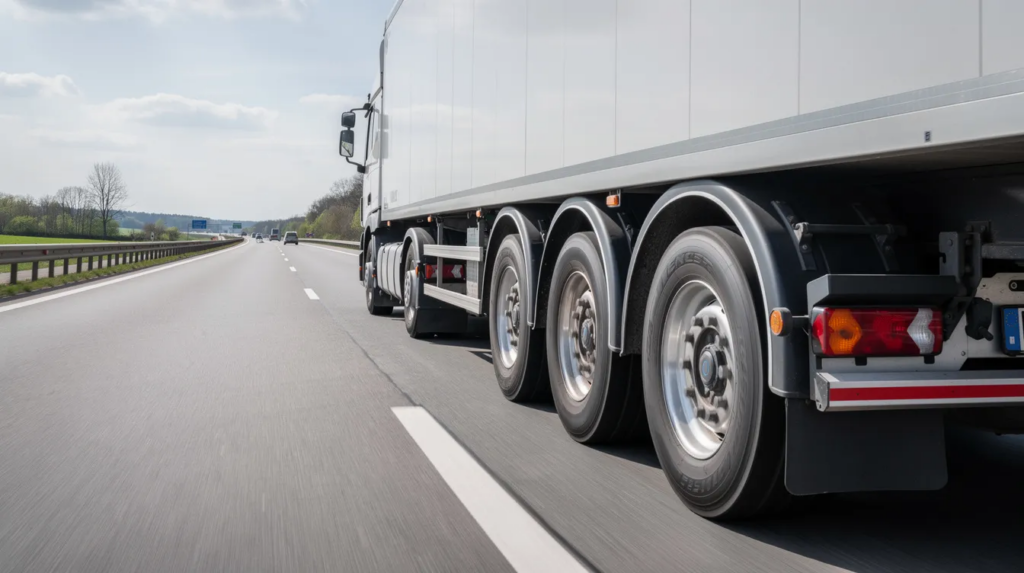
In long-distance trucking on corridors such as A2, A3, A5, A7 and A9, long distance transport relies heavily on the fast-charging network as a critical factor. Freight companies depend on MCS and HPC at managed service areas to recharge during legally required driving breaks. Efficient route planning and the operation of fast charging infrastructure are essential for optimizing charging stops and minimizing downtime for battery electric trucks. The typical driving cycle of 4.5 hours followed by a 45-minute break fits well with the charging profile of modern fast-charging stations.
Megawatt Charging Systems (MCS) can charge heavy-duty trucks for a range of hundreds of kilometers in just 30 to 45 minutes, enabling long-distance transport with minimal charging time. This technology requires advanced technical equipment, including ultra-high-power DC chargers and enhanced cooling systems. Battery electric trucks benefit from these high-performance charging solutions, supporting emission-free long-distance freight transport.
Regional distribution and factory logistics
In regional operations — for parcel delivery, beverage logistics or municipal fleets — depot charging dominates. Vehicles return daily to the depot and charge overnight at moderate power levels. Energy demand is shifted to off-peak periods, reducing electricity costs.
The expansion of e truck charging infrastructure, supported by the federal ministry of transport, is critical for regional and factory logistics. The German government adopted comprehensive measures in October 2022 with the Charging Infrastructure Master Plan II to enable the electrification of heavy road freight transport. The National Centre for Charging Infrastructure is working on the development of charging infrastructure to meet climate protection targets in the transport sector.
Depot charging for commercial fleets
Depot charging is rapidly becoming the backbone of electric mobility for heavy commercial vehicles in Germany. By equipping company premises with dedicated charging infrastructure, fleet operators can ensure reliable charging for their trucks during scheduled downtimes, such as overnight or between shifts. This approach not only streamlines the charging process but also allows companies to take advantage of lower electricity rates during off-peak hours, further reducing operational costs. The National Centre for Charging Infrastructure has published comprehensive guidelines to support businesses in planning and implementing depot charging solutions tailored to their specific needs. As more commercial vehicles transition to electric power, depot charging infrastructure will play a central role in enabling sustainable logistics and helping the transport sector meet ambitious climate targets. By investing in robust charging infrastructure for heavy vehicles, companies can future-proof their fleets and contribute to a cleaner, more efficient transport landscape.
Closed hubs and industrial areas
In port logistics (Hamburg and Bremerhaven), quarries, construction sites and large industrial parks, heavy duty trucks and e truck operations follow fixed routes with high utilization rates. In these environments, robust grid connection and charging hub infrastructure are essential to support the continuous operation of electric trucks. Battery swapping can theoretically show advantages here — provided battery standards are compatible. In practice, stationary charging solutions still dominate. Joint ventures and the management board play a key role in overseeing the development and operation of charging infrastructure projects in these areas. The charging infrastructure for electric trucks is being developed to support the transition to zero-emission heavy-duty transport across Europe.
LKW Help 24 primarily operates along long-haul corridors and around major logistics regions such as the Ruhr area, Hamburg and Leipzig/Halle. In cases of charging failures, immobilized vehicles or blocked chargers, the towing service handles recovery and relocation.
Build-out of the truck fast-charging network: MCS and CCS along motorways

The federal minister and the federal ministry of transport are actively coordinating and supporting the rollout of Germany’s nationwide truck charging network. The German federal government plans to subsidise the construction of high-power charging stations for heavy-duty battery electric vehicles at unmanaged motorway rest areas. The first tender for the truck fast-charging network at unmanaged rest areas along the federal motorways was published on 16.09.2024. The European Commission approved a German funding program of up to €1.6 billion to support the deployment of heavy electric commercial vehicle charging hubs along the national motorway network. This funding program aims to construct high-power charging stations for heavy-duty battery electric vehicles primarily at unmanaged motorway rest areas and is expected to inform best practices for similar schemes across the EU. The German initiative for e-truck charging hubs aligns closely with the EU’s Fit for 55 climate framework and the objectives of the Alternative Fuels Infrastructure Regulation.
Germany’s National Charging Infrastructure Control Center coordinates the rollout of a nationwide truck charging network. By 2030, the fast-charging network for trucks along federal motorways will include around 350 locations, with approximately 1,800 MCS charging points and around 2,400 CCS charging points at managed and unmanaged rest areas. The target spacing: no more than 100 km between charging options.
Key motorway corridors
- A2 — Ruhr area to Berlin — main east-west axis
- A3 — Cologne to Frankfurt to Nuremberg — western north-south link
- A5 — Frankfurt to Basel — southern transit axis
- A7 — Hamburg to Munich — longest German motorway
- A9 — Berlin to Munich — eastern corridor
Charging stations and accessibility

A robust and accessible charging network is essential for the successful market ramp-up of electric trucks and the decarbonization of heavy duty transport. Strategic placement of charging stations along major highways and at key logistics hubs ensures that electric heavy duty vehicles can operate seamlessly across long distances. The Alternative Fuels Infrastructure Regulation (AFIR) sets clear targets for all EU member states, requiring the installation of dedicated truck charging infrastructure every 60 to 100 kilometers in each direction by 2030. This regulatory push is driving significant investment in high power charging stations, including the rollout of megawatt charging systems (MCS) capable of delivering up to 3.5 MW—enabling rapid charging for even the largest heavy goods vehicles. The development of a pan-European charging network will further support cross-border operations, making electric trucks a practical solution for long haul transport and sustainable logistics. As the charging network expands, it will provide the reliability and coverage needed to support the growing number of electric vehicles in the transport sector, accelerating the shift towards climate-friendly commercial vehicles and a more sustainable future for road freight transport.
The HoLa project as a pioneer
The “High-performance charging in real long-haul trucking” (HoLa) project, coordinated by Fraunhofer ISI and P3 Group, is testing the Megawatt Charging System (MCS) under real conditions. Daimler Truck is actively involved in the HoLa project, supporting the development and integration of battery electric trucks into the charging infrastructure. The project includes the deployment and testing of MCS points, which are essential for enabling high-capacity charging for battery electric commercial vehicles. At sites such as Lipperland Süd on the A2, charging capacities of up to 1.2 MW are being tested. Additional sites in Lehre, Wustermark and Hamburg reach up to 5 MW. The HoLa project is funded with 12 million euros by the German Federal Ministry for Transport as part of its electric mobility funding program. Notably, the first public MCS for battery-electric trucks was inaugurated in Germany as part of the HoLa project. The overall concept of HoLa is a comprehensive approach to advancing high-performance charging infrastructure and supporting the electrification of heavy-duty transport.
How the Megawatt Charging System works
MCS enables charging capacities of over one megawatt — significantly more than CCS with up to 350 kW. The primary difference between 300 and 400 kW charging stations lies in their power output and the corresponding equipment requirements, with higher output stations requiring more robust components. Megawatt Charging Systems (MCS) can deliver up to 3.5 MW of power for electric trucks, allowing for much faster charging. MCS chargers can fully recharge a truck from 0 to 100 percent in approximately 30 to 45 minutes. A special MCS connector with larger cross-section and liquid cooling transmits the energy. Collaboration between vehicle manufacturers and infrastructure providers is essential to ensure trucks are compatible with MCS technology and can utilize the new high-capacity charging infrastructure effectively. Early series trucks such as the Mercedes-Benz eActros 600 are already prepared for MCS charging. Manufacturers including MAN, Volvo Group and Scania are following.
European dimension: Milence and other consortia
Milence, a joint venture involving major automotive and trucking companies, plays a key role in the operation and development of a nationwide network of high-capacity charging hubs for electric trucks across Europe. Milence plans to invest 500 million euros to set up 1,700 public charging stations by 2027 across several European countries. The company currently operates several 400 kW charging hubs in Belgium, Netherlands, and France, with plans to open more in Sweden, Germany, and France in 2024. Milence operates 16% of the public charging points dedicated to electric heavy-duty trucks in Europe, making it the leading operator across several key European markets.
The Milence consortium plans more than 1,700 fast and ultra-fast charging stations for commercial vehicles in Europe by 2027. In Germany, sites are being developed along major transit routes covering a significant share of European freight traffic.
The number of public charging stations available within the EU more than doubled over the past two years, growing from around 300,000 in Q1 2021 to 700,000 in Q1 2024. Despite this rapid growth, the EU will need an estimated 3.4 million operational public charging points by 2030 to meet the needs of its future electric vehicle fleet. Three countries – Netherlands, France, and Germany – house about 61 percent of all chargers in Europe, highlighting a significant imbalance across the continent. Currently, Europe has more than 6,000 charging points capable of accommodating trucks (above 350 kW), and while exact numbers can fluctuate, estimates suggest that there are several hundred 400 kW charging stations either operational or planned across Europe.
If an electric truck aborts charging at a service area or becomes immobilized due to software issues, LKW Help 24 provides rapid recovery and towing support.
Electric truck charging – FAQ
The elektro truck is reshaping logistics. Whether a single e truck or a fleet of elektro trucks, we support carriers with charging, battery swaps and roadside help for electric trucks across Germany.